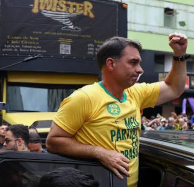
Brazilian President Luiz Inácio Lula da Silva and right-wing challenger Flávio Bolsonaro head into Sunday’s first-round vote locked in one of the tightest presidential races in the country’s recent history, with a sprawling bank-fraud scandal reshaping the final days of campaigning for both camps.
Lula, 80, seeking an unprecedented fourth term, has traded the lead with Bolsonaro, 45, the senator son of former president Jair Bolsonaro, in recent surveys, with most major pollsters showing a gap of two points or less heading into the vote. A late September AtlasIntel poll for Bloomberg put the two tied at roughly 47 percent each in a hypothetical runoff, while other surveys in the campaign’s final week showed Lula with a narrow single-digit edge.
The scandal centers on the collapse of Banco Master, a major Brazilian lender, and the jailing of its former chief executive, Daniel Vorcaro, whose connections have touched political figures across the spectrum. Pollsters say the fallout has damaged Lula more than Bolsonaro, with a September Atlas/Bloomberg survey finding that more than half of respondents said alleged links between Vorcaro and members of Brazil’s Supreme Court had hurt Lula’s candidacy, compared with roughly a fifth who said the same of Bolsonaro. Lula has also faced separate scrutiny over a federal police investigation into his son, Fábio Luís Lula da Silva, on influence-peddling allegations.
Bolsonaro has faced his own setbacks, including a public rift with his stepmother, former first lady and Senate candidate Michelle Bolsonaro, which analysts say has cost him support among women and independent voters. Public anger over violent crime has also featured heavily in the campaign, prompting Bolsonaro to pledge construction of supermax prisons modeled on those built under El Salvador’s President Nayib Bukele.
Sunday’s first round features 13 presidential candidates, with polls indicating neither Lula nor Bolsonaro is likely to secure the outright majority needed to avoid a runoff. A second-round vote, should one be required, is scheduled for October 25. The election will also renew Brazil’s Chamber of Deputies and two-thirds of the Senate, which has held a conservative majority in recent years, with the outcome expected to shape the direction of the Supreme Court and the country’s security policy.