
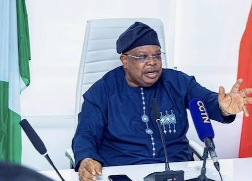
Nigeria’s federal government is targeting 80% electricity access for its population within five years, part of a broader reset of the country’s power sector aimed at strengthening the national grid and expanding supply to millions of Nigerians who remain off-grid.
Power Minister Joseph Tegbe outlined the plan as part of a wider strategy that includes universal metering, reduced technical losses and greater private investment in generation, transmission and distribution. The minister said the government’s immediate priority was to stabilise supply and improve reliability, with the impact of reforms expected to become more visible within two to three years.
Nigeria currently generates around 5,000 megawatts on a consistent basis, well below the level needed to meet demand across Africa’s most populous nation, where more than 80 million people still lack access to grid electricity. Officials have said meeting universal access targets will require roughly ten times the current level of annual investment in the electricity value chain.
The government has ruled out near-term tariff increases and is instead betting on measures such as expanded mini-grid deployment and transmission upgrades to close the access gap. Nigeria is also part of the World Bank and African Development Bank’s Mission 300 initiative, which aims to connect 300 million people across Africa to electricity by 2030, with Nigeria targeting a share of roughly 75 million of those new connections.