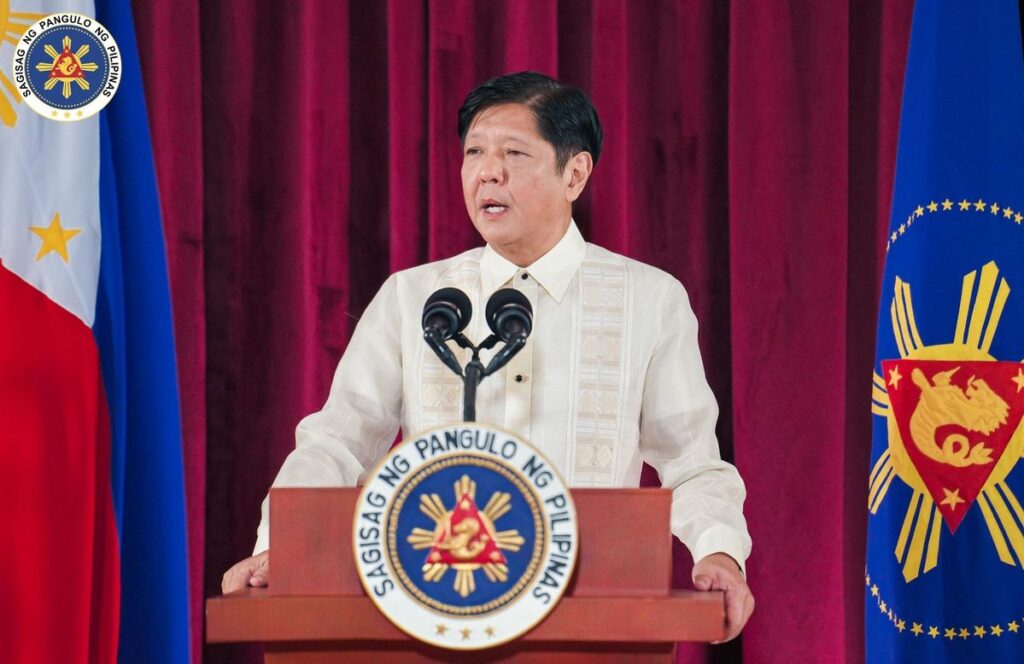
Philippine President Ferdinand “Bongbong” Marcos Jr. (BBM) is spearheading efforts to position the Philippines as a central player in a growing artificial intelligence (AI) ecosystem designed to serve Southeast Asia’s economies, with particular attention to agriculture and regional supply chains.
The initiative reflects a broader shift across Southeast Asia, where governments are increasingly viewing AI not just as a technology trend but as strategic infrastructure. Under Marcos’ leadership, the Philippines is seeking to integrate AI into national development planning while aligning its ambitions with regional priorities under the Association of Southeast Asian Nations (ASEAN).
At the core of the strategy is the creation of an interconnected AI environment that links government, private enterprise, research institutions, and startups. Rather than focusing solely on consumer technology, the approach emphasizes applied AI—tools that can improve productivity, transparency, and resilience across key sectors. Agriculture and agri-based supply chains have emerged as early focal points due to their central role in food security, employment, and export earnings across Southeast Asia.
Officials close to the initiative say AI is being positioned as a solution to long-standing challenges in agriculture, including low productivity, climate vulnerability, post-harvest losses, and inefficient distribution networks. By deploying AI-driven data analytics, predictive modeling, and digital advisory systems, governments and agribusinesses aim to help farmers make better decisions, reduce waste, and connect more efficiently to domestic and regional markets.
The Philippines’ vision goes beyond national borders. Marcos has repeatedly emphasized the importance of regional cooperation, arguing that Southeast Asia’s fragmented digital landscape limits the full potential of AI. By promoting shared standards, interoperable systems, and cross-border collaboration, the proposed ecosystem seeks to support regional trade flows and strengthen supply chain integration across ASEAN.
Agricultural supply chains are a natural testing ground for this approach. AI applications under discussion include yield forecasting, climate and weather risk assessment, logistics optimization, and quality control across food processing and export stages. These tools could help reduce price volatility, improve traceability, and support compliance with international standards—key concerns for Southeast Asian producers competing in global markets.
Another pillar of the ecosystem is talent development. The Marcos administration has signaled that building AI capacity will require sustained investment in education, research, and skills training. Universities and technical institutions are expected to play a role in developing local expertise, while partnerships with global technology firms could help accelerate knowledge transfer and infrastructure development.
Digital governance is also a central theme. Philippine policymakers have stressed the need for ethical, transparent, and inclusive AI deployment, particularly in sectors like agriculture where smallholder farmers dominate. Safeguards around data ownership, privacy, and algorithmic accountability are being framed as essential to ensuring that AI adoption does not deepen inequality or exclude rural communities.
International observers see the initiative as part of a wider geopolitical and economic realignment. As global supply chains diversify and technology competition intensifies, Southeast Asian countries are under pressure to modernize production systems while maintaining food security. An AI ecosystem that strengthens agri-chains could enhance the region’s resilience to shocks ranging from climate change to trade disruptions.
Challenges remain. Infrastructure gaps, uneven digital readiness, and funding constraints could slow implementation, particularly in rural areas. There are also questions about how quickly small-scale farmers and cooperatives can adopt advanced technologies without targeted support. Nonetheless, analysts say the direction of travel is clear: AI is becoming a core component of Southeast Asia’s development strategy, not a peripheral experiment.
By anchoring AI policy in agriculture and supply chains, Marcos is betting that practical, sector-focused applications will deliver early results and build momentum for wider digital transformation. If successful, the initiative could help position the Philippines as a regional hub for applied AI—one that links technology, food systems, and economic cooperation across Southeast Asia.
For an international audience, the message is unmistakable: Southeast Asia is no longer just consuming technology developed elsewhere. Through initiatives like this, it is beginning to shape how AI is built, governed, and applied—starting from the farm and extending across regional value chains.