The United States has warned that it could expand its military operations in Nigeria if attacks against Christian communities persist, signaling a shift in Washington’s approach to regional security and counter-terrorism.
In recent remarks, U.S. President Donald Trump said that additional airstrikes could follow an earlier strike against extremist targets, depending on how the security situation evolves. The warning links potential U.S. action directly to continued violence against Christians, a framing that has sparked global attention and debate.
“I would like this to be a one-time action,” Trump said, “but if they continue to be killed, there will be multiple strikes.” The statement reflects growing concern within the U.S. administration over violence in parts of Nigeria where militants have targeted vulnerable communities, including Christians.
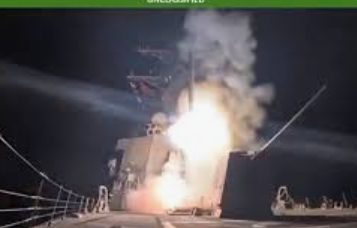
The initial strike, carried out during the holiday period, was aimed at militant groups responsible for longstanding attacks on civilians and security forces. U.S. officials described it as part of a broader effort to support Nigerian authorities in combating extremist threats.
Nigeria has faced complex violence for many years. Insurgent groups in the northeast, armed bandits in the northwest, and community clashes in the central region have all contributed to widespread insecurity. Christians and Muslims alike have suffered in these conflicts, though some communities say they are disproportionately targeted in certain areas.
The Nigerian government has consistently rejected claims that it tolerates violence against specific religious groups, maintaining that its security operations are aimed at all forms of violent extremism and criminality. Abuja has also reiterated its openness to international cooperation while emphasizing respect for national sovereignty.
Trump’s comments have drawn mixed reactions. Supporters argue that a firm stance could deter further attacks and underscore U.S. commitment to protecting persecuted communities. Critics, however, caution that linking military action solely to attacks on Christians oversimplifies a multifaceted crisis rooted in terrorism, governance challenges, and resource competition.
Diplomats and security analysts note that any expansion of U.S. air operations would require careful planning with Nigerian partners to avoid unintended consequences and ensure that actions align with broader peace and stability goals. They also stress the importance of addressing the root causes of violence, including economic marginalization and local grievances.
For now, no new airstrikes have been officially announced. But Trump’s warning underscores a willingness in Washington to consider further military involvement if conditions on the ground do not improve.