
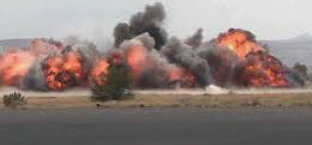
Saudi Arabia, Houthis Exchange Strikes, Breaking Four-Year Truce

Table of Content

Yemen’s Houthi movement fired missiles at Saudi Arabia on Monday after accusing the kingdom of bombing an airport under their control, in the most serious cross-border escalation between the two sides since an informal truce took hold in 2022.

Saudi Arabia said it intercepted missiles fired by Houthi forces toward the kingdom’s southern region. The Houthis said they targeted the international airport in Abha, a mountain city in southwestern Saudi Arabia near the Yemen border, and warned airlines to avoid Saudi airspace until what they called a blockade on Sanaa’s airport was lifted.

The exchange began earlier Monday when Saudi warplanes struck Sanaa International Airport, controlled by the Houthis, to stop a plane carrying a Houthi delegation from landing after returning from the funeral of Iran’s assassinated Supreme Leader, Ali Khamenei, in Tehran. A U.S. official said the aircraft was believed to be carrying weapons, missile components and military personnel for the Houthis. The plane was diverted and landed instead at Hodeidah, a Red Sea port under Houthi control. Yemen’s Saudi-backed government, which claimed responsibility for the Sanaa strike, accused Iran of violating Yemeni sovereignty by attempting the landing.

According to people familiar with the matter, Saudi Crown Prince Mohammed bin Salman notified President Trump in advance and sought U.S. backing before authorizing the strike, reflecting Saudi concern that a broader conflict with the Houthis could require American military and diplomatic support. Saudi officials had raised concerns with Washington the previous week, followed by a meeting between the Saudi ambassador and Secretary of State Marco Rubio.

The clash comes after a Houthi-Yemeni government prisoner exchange mediated by the International Committee of the Red Cross recently collapsed, with both sides trading blame. It also follows years of relative calm along the Saudi-Yemen border, even as the Houthis carried out missile and drone attacks on Israel and Red Sea shipping during the Gaza war and, more recently, limited symbolic strikes tied to the broader Iran conflict. Saudi Arabia’s ability to export crude via a pipeline running from its east to Red Sea terminals, bypassing the Strait of Hormuz entirely, could be jeopardized if the Houthis resume targeting Red Sea shipping as they did in past years. Yemen analysts cautioned that while both sides have so far avoided a full return to war, the risk of further escalation is rising.

support@paulkizitoblog.com

support@paulkizitoblog.com http://paulkizitoblog.com

Leave a Reply

Your email address will not be published. Required fields are marked *

Recent News

Trending News

Editor's Picks

Saudi Arabia, Houthis Exchange Strikes, Breaking Four-Year Truce

Yemen’s Houthi movement fired missiles at Saudi Arabia on Monday after accusing the kingdom of bombing an airport under their control, in the most serious cross-border escalation between the two sides since an informal truce took hold in 2022. Saudi Arabia said it intercepted missiles fired by Houthi forces toward the kingdom’s southern region. The Houthis said they targeted the international airport in Abha, a mountain city in southwestern Saudi Arabia near the Yemen border, and warned airlines to avoid Saudi airspace until what they called a blockade on Sanaa’s airport was lifted. The exchange began earlier Monday when Saudi warplanes struck Sanaa International Airport, controlled by the Houthis, to stop a plane carrying a Houthi delegation from landing after returning from the funeral of Iran’s assassinated Supreme Leader, Ali Khamenei, in Tehran. A U.S. official said the aircraft was believed to be carrying weapons, missile components and military personnel for the Houthis. The plane was diverted and landed instead at Hodeidah, a Red Sea port under Houthi control. Yemen’s Saudi-backed government, which claimed responsibility for the Sanaa strike, accused Iran of violating Yemeni sovereignty by attempting the landing. According to people familiar with the matter, Saudi Crown Prince Mohammed bin Salman notified President Trump in advance and sought U.S. backing before authorizing the strike, reflecting Saudi concern that a broader conflict with the Houthis could require American military and diplomatic support. Saudi officials had raised concerns with Washington the previous week, followed by a meeting between the Saudi ambassador and Secretary of State Marco Rubio. The clash comes after a Houthi-Yemeni government prisoner exchange mediated by the International Committee of the Red Cross recently collapsed, with both sides trading blame. It also follows years of relative calm along the Saudi-Yemen border, even as the Houthis carried out missile and drone attacks on Israel and Red Sea shipping during the Gaza war and, more recently, limited symbolic strikes tied to the broader Iran conflict. Saudi Arabia’s ability to export crude via a pipeline running from its east to Red Sea terminals, bypassing the Strait of Hormuz entirely, could be jeopardized if the Houthis resume targeting Red Sea shipping as they did in past years. Yemen analysts cautioned that while both sides have so far avoided a full return to war, the risk of further escalation is rising. support@paulkizitoblog.com