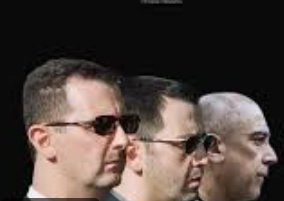
A Syrian court on Tuesday sentenced ousted Syrian president Bashar al-Assad, his brother Maher al-Assad and his cousin Atef Najib to death in absentia over alleged crimes against humanity, in the first trial of the ousted regime 20 months after it was deposed.
Fourth Criminal Court in Damascus sentenced them to death for premeditated murder, torture and other charges in connection to the 14-year long civil war that left half a million people dead.
Judge Fakhareddine al-Aryan, who presided over the trial that was broadcast on state television said that Assad “has committed crimes against the people of Syria by virtue of his position as head of state.”
Al-Assad, his brother Maher and six other former officials were sentenced in absentia to death for premeditated murder and torture. Najib was the only one present in the courtroom as he was kept in a prisoner’s cage in his judicial convict’s uniform. He was sentenced to death for torturing scores of people during the crackdown on protesters in Daraa in 2011, which sparked the uprising and the war.
After Bashar and Maher al-Assad were overthrown by the rebels in December 2024, they fled to Russia where they were given political asylum. The new authorities in Syria have asked Russia to extradite them, but so far Moscow has refused, meaning the sentences have little practical effect for now. Maher al-Assad commanded the Fourth Armored Division of the Syrian Army, which was accused by the rebels of committing atrocities and operating torture centers.
Outside the courthouse people gathered to mark the occasion. Many of them waved pictures of their relatives who were killed or injured in attacks carried out by the former regime. Human rights groups were more cautious about the trial, noting that a Syria researcher for Human Rights Watch said that despite their concerns about the death penalty, “it is important for victims to see justice done.” Many legal experts believe that the sentencing can set a precedent for trying other officials still at large, but it remains to be seen if any of them will actually be brought to court.