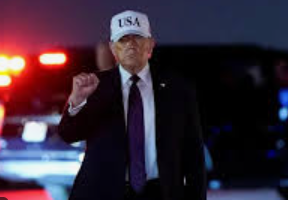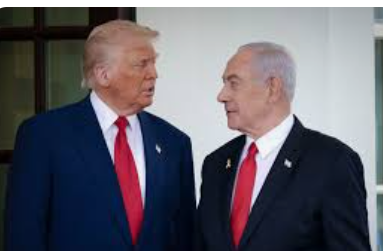
President Trump and Israeli Prime Minister Benjamin Netanyahu have reportedly agreed that the United States should intensify pressure on Iran by targeting one of its most critical economic lifelines: oil exports, particularly those going to China.
The report, cited by Axios and picked up by major international outlets, suggests that both leaders see Iran’s oil trade with Beijing as a key vulnerability — and one that could be leveraged to weaken Tehran’s financial position at a time of heightened regional tension and ongoing nuclear concerns.
While the details of any future policy steps remain unclear, the reported alignment underscores a broader strategic debate: should Iran be confronted primarily through economic force, diplomatic engagement, or some combination of both?
Iran’s Oil Exports: The Backbone of a Strained Economy
Iran’s economy has been under significant strain for years due to sanctions, inflation, and restricted access to global financial markets. Despite these pressures, oil exports remain one of Tehran’s most important sources of revenue.
Energy sales provide the Iranian government with vital income to fund public spending, stabilize domestic institutions, and maintain its regional activities. Even under sanctions, Iran has continued exporting crude through alternative channels, with China widely regarded as its largest customer.
In this context, restricting oil exports is not simply an economic measure — it is a strategic tool aimed at limiting Iran’s ability to operate both domestically and internationally.
Supporters of stronger enforcement argue that if Iran’s oil income is significantly reduced, Tehran may face greater incentives to negotiate on issues such as its nuclear program or regional security policies.
A Renewed Focus on Economic Pressure
The reported agreement between Trump and Netanyahu signals a renewed emphasis on economic pressure as a central pillar of Iran policy.
During Trump’s earlier presidency, the United States pursued a strategy often described as “maximum pressure,” reimposing sweeping sanctions after withdrawing from the 2015 nuclear agreement. That approach was designed to isolate Iran economically and force concessions through financial strain.
Netanyahu has long supported a tougher stance toward Tehran, viewing Iran’s nuclear ambitions and regional influence as direct threats to Israeli security. For Israel, weakening Iran’s economic capacity is seen as part of a broader effort to reduce Tehran’s ability to support allied groups across the Middle East.
If the United States and Israel are once again coordinating closely on this front, it could represent a more assertive phase in regional diplomacy — or confrontation.
China’s Central Role Complicates the Equation
One of the most significant aspects of this reported strategy is the focus on China.
China is not only the world’s second-largest economy but also one of the largest global energy consumers. Its purchases of Iranian oil are often viewed through multiple lenses: economic necessity, geopolitical positioning, and resistance to Western-dominated sanctions frameworks.
Beijing has maintained trade ties with Tehran even when other major buyers reduced imports. China has often framed its relationship with Iran as part of broader economic cooperation rather than a political statement.
However, Washington sees the situation differently. U.S. officials have long argued that Chinese purchases of sanctioned oil undermine international pressure efforts and provide Tehran with resources that could support destabilizing activities.
Trying to restrict Iran’s oil exports to China is therefore not only a Middle East policy — it is also a move that touches directly on U.S.–China competition, global trade norms, and energy market realities.
Any attempt to force China to reduce imports could raise diplomatic friction between Washington and Beijing at a time when relations are already strained over technology, security, and global influence.
The Diplomatic Backdrop: Talks and Tensions
The timing of this reported agreement is also important because diplomatic efforts regarding Iran have not disappeared.
International discussions around Iran’s nuclear program continue through indirect channels and intermediaries. Many global actors, including European states and regional mediators, have argued that diplomacy remains the most sustainable path to preventing escalation.
This creates a complicated balancing act for Washington: applying pressure while keeping negotiations alive.
Some analysts argue that economic leverage can strengthen diplomatic bargaining power, pushing Iran toward compromise. Others warn that excessive sanctions may harden Iran’s position, making negotiation more difficult and increasing the risk of retaliation.
Iran, for its part, has repeatedly stated that sanctions are a form of economic warfare and has insisted that it will not negotiate under what it views as coercion.
Potential Regional Consequences
The Middle East remains one of the world’s most geopolitically sensitive regions, and any shift in Iran policy carries significant ripple effects.
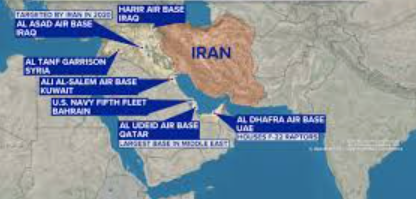
Israel views Iran as its most serious long-term security challenge, particularly due to Tehran’s missile program and its support for armed groups in Lebanon, Syria, Iraq, and Yemen.
Gulf Arab states, while increasingly focused on economic development and stability, remain wary of Iranian influence and potential escalation.
If Iran’s oil revenue is sharply reduced, Tehran may face constraints — but it could also respond unpredictably, potentially increasing tensions through regional proxies or maritime disruptions.
The risk is that economic pressure, while non-military in form, can still contribute to cycles of escalation if not paired with diplomatic off-ramps.
Global Energy Markets at Stake
Oil is not just a political commodity — it is a global economic one.
Any serious disruption in Iranian exports could affect global supply, depending on how other producers respond. While Iran is not the largest exporter compared to Saudi Arabia or Russia, its contribution still matters in a market sensitive to shocks.
If U.S. enforcement actions become more aggressive, traders may price in geopolitical risk, potentially raising volatility.
At the same time, China’s energy needs are enormous, meaning Beijing would likely seek alternative suppliers if Iranian oil becomes harder to obtain.
This could shift trade flows, increase competition for supply, and add another layer of complexity to global energy diplomacy.
Supporters and Critics of the Strategy
Supporters of tougher action argue that Iran has used oil revenues to fund activities that destabilize the region, and that cutting off this income is one of the strongest peaceful tools available.
They believe sanctions pressure can limit Iran’s strategic reach and potentially force serious negotiations.
Critics, however, argue that sanctions often hurt ordinary citizens more than political elites, contributing to inflation, unemployment, and humanitarian strain.
They also warn that isolating Iran economically may reduce incentives for cooperation, pushing Tehran closer to alternative alliances with China and Russia rather than reintegrating into global frameworks.
The debate reflects a broader global question: do sanctions change state behavior effectively, or do they entrench conflict?
A Broader Geopolitical Signal
Beyond Iran itself, the reported Trump–Netanyahu agreement reflects deeper shifts in the international system.
The United States continues to rely heavily on financial tools and sanctions as instruments of foreign policy.
Israel remains determined to prevent Iran from achieving nuclear weapons capability.
China is increasingly central to Middle Eastern energy dynamics, challenging the effectiveness of Western-led economic pressure.
And Iran remains positioned at the crossroads of regional rivalry and global competition.
In many ways, this issue is not only about oil — it is about influence, alliances, and the future shape of global power.
Conclusion: Pressure, Diplomacy, and Uncertainty Ahead
The reported agreement between President Trump and Prime Minister Netanyahu to push harder against Iran’s oil exports to China highlights the evolving nature of international pressure campaigns.
It underscores a strategy aimed at weakening Tehran economically while addressing longstanding security concerns — but it also introduces new complexities involving China, global markets, and regional stability.
Whether this approach leads to meaningful negotiations, heightened confrontation, or a reshaping of energy geopolitics remains uncertain.
What is clear is that Iran’s oil trade is no longer just an economic matter — it is a major geopolitical battleground, connecting Washington, Jerusalem, Tehran, and Beijing in a high-stakes contest with global consequences.