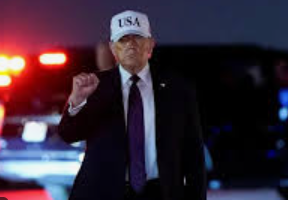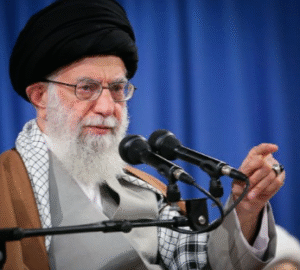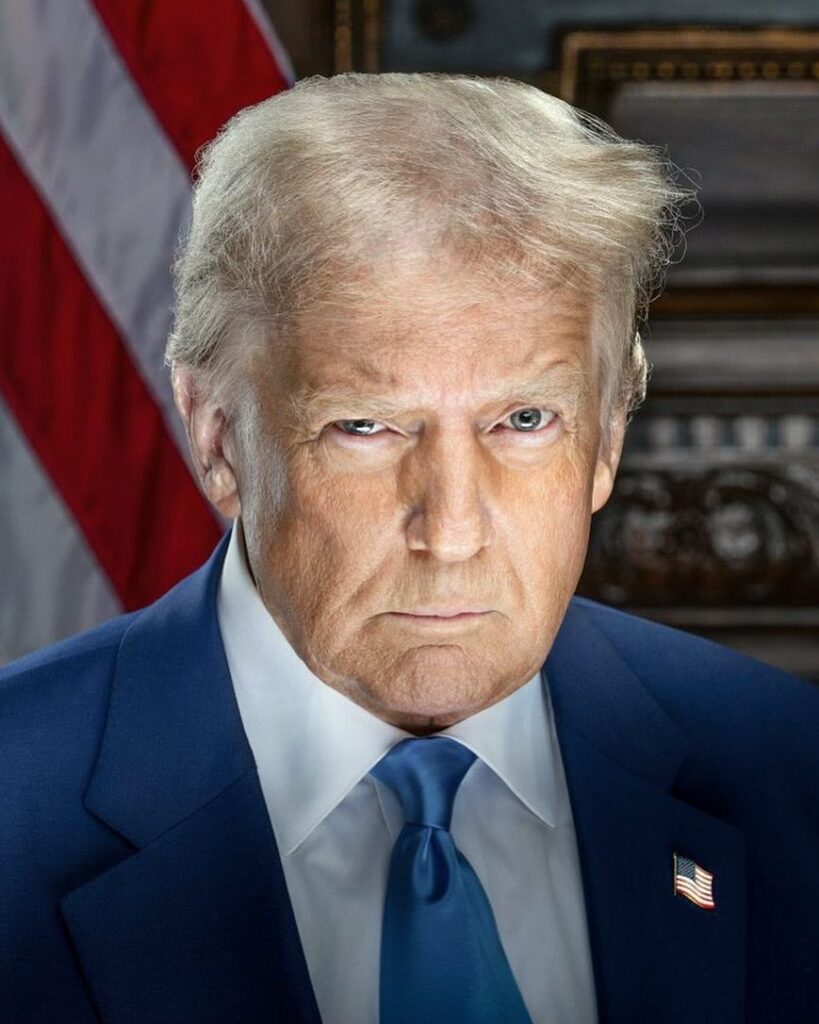
U.S. President Donald Trump sparked global attention this weekend by publicly stating that a change in Iran’s leadership — often referred to as “regime change” would be “the best thing that could happen.” His comments came against a backdrop of escalating tensions between Washington and Tehran and coincided with the deployment of a second U.S. aircraft carrier strike group to the Middle East.
Trump made the remarks on Friday after visiting U.S. troops at Fort Bragg in North Carolina, where he was asked about Washington’s policy toward Iran. In a blunt assessment of nearly five decades of U.S.–Iran relations, which have been fraught since the 1979 Islamic Revolution, he suggested that replacing Iran’s current leadership could benefit regional stability after years of what he described as unproductive diplomacy. However, he did not specify what form such a transition might take or who he believes should replace the existing regime.
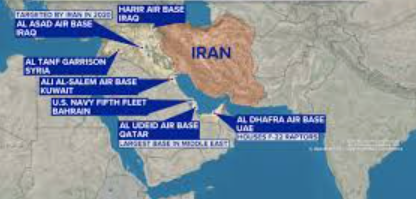
At the same time, the U.S. is significantly reinforcing its military presence in the Middle East. The USS Gerald R. Ford — the Navy’s newest and most advanced aircraft carrier — is being redirected from the Caribbean to join the existing U.S. carrier USS Abraham Lincoln and other assets in the region. According to U.S. officials, the additional force is intended to provide strategic depth and deterrence amid mounting tensions with Tehran, particularly if diplomatic efforts fail to yield a satisfactory agreement.
Trump emphasized that the deployments are meant to strengthen U.S. posture “in case we don’t make a deal” with Iran, underlining the possibility that Washington could shift from diplomatic engagement to a posture of increased pressure.
Despite the hawkish rhetoric, U.S. representatives are still pursuing diplomatic channels. Senior American envoys, including Jared Kushner and Steve Witkoff, are reported to be preparing for talks in Geneva with Iranian officials, mediated by Oman, in a bid to revive negotiations focused on Iran’s nuclear program and its regional activities.
Iran’s relationship with the United States has been tense for decades. Tehran’s nuclear ambitions, its support for various regional militias, and disagreements over sanctions all contribute to a complex geopolitical landscape. Iran insists its nuclear activities are peaceful, while the U.S. and many of its allies express deep skepticism and cite past violations of international agreements.
In recent years, domestic unrest within Iran and military strikes — including on suspected nuclear sites — have added layers of uncertainty to the already fragile situation. Regional actors, particularly Gulf Arab states, have expressed concern that any escalation could trigger broader instability and conflict across the Middle East.
Trump’s open advocacy for regime change marks a stark and provocative shift in public U.S. policy rhetoric toward Iran. Whether this signals a new strategic direction — or is primarily intended to strengthen Washington’s leverage in ongoing negotiations — remains a topic of debate among analysts.