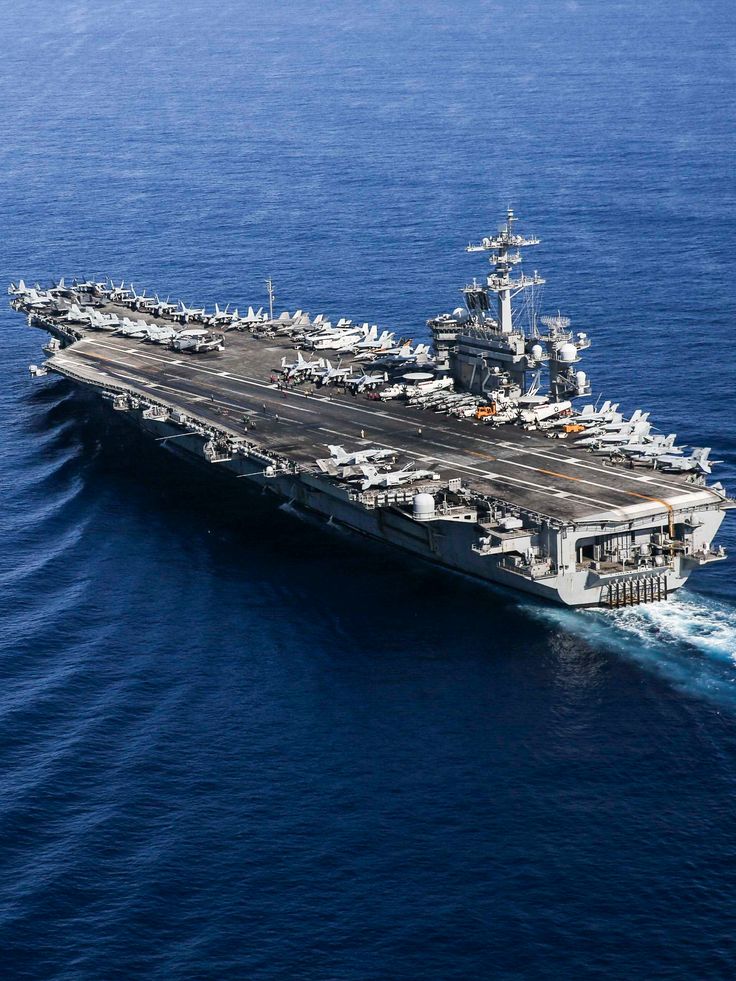
The United States has significantly increased its military presence near Iran, with the nuclear-powered aircraft carrier USS Abraham Lincoln moving closer to the region amid rising tensions between Washington and Tehran. The deployment is widely seen as a signal of deterrence at a time of heightened instability in the Middle East.
U.S. defense officials say the carrier strike group’s movement is part of routine operations, but analysts note that its timing coincides with escalating concerns over Iran’s nuclear activities, regional proxy conflicts, and internal unrest inside the country.
A Show of Force in a Volatile Region
The Abraham Lincoln, accompanied by guided-missile destroyers and cruisers, is one of the most powerful naval assets in the U.S. arsenal. Its presence allows the United States to conduct air operations, missile defense, and maritime security missions across a vast area, including the Persian Gulf, the Gulf of Oman, and the Arabian Sea.
Pentagon officials emphasize that the deployment is intended to deter aggression and protect U.S. personnel and allies, rather than provoke direct confrontation. However, Iran has repeatedly warned that any increase in U.S. military activity near its borders will be viewed as a hostile act.
Iranian state media has described the carrier’s approach as a “threatening maneuver,” while senior Iranian officials have reiterated that Tehran is prepared to respond to what it sees as external pressure.
Rising U.S.–Iran Friction
Relations between the United States and Iran have deteriorated further in recent months. Talks aimed at limiting Iran’s nuclear program have stalled, while Tehran continues to expand uranium enrichment beyond previous international limits. Washington maintains that Iran’s actions risk destabilizing the region and could shorten the time needed to develop a nuclear weapon — a claim Iran denies.
At the same time, the U.S. has intensified sanctions targeting Iran’s oil exports and financial networks, including vessels accused of operating outside international regulations. These measures are intended to restrict revenue streams that Washington says fund Iran’s military activities and regional allies.
Regional Implications
The movement of the Abraham Lincoln comes amid broader regional tensions involving Israel, Gulf states, and armed groups aligned with Iran across the Middle East. U.S. allies have expressed concern that miscalculation on either side could trigger a wider conflict affecting global energy supplies and international trade routes.
Security analysts warn that crowded waterways and overlapping military operations increase the risk of accidental clashes. “When major naval forces operate in close proximity, even small incidents can escalate quickly,” said one regional security expert.
Balancing Deterrence and Diplomacy
Despite the military buildup, U.S. officials insist diplomatic channels remain open. Washington says it continues to seek a negotiated solution to prevent Iran from developing nuclear weapons, while stressing that all options remain on the table if diplomacy fails.
Iran, meanwhile, argues that U.S. pressure tactics undermine trust and insists that its nuclear program is for peaceful purposes.
What Happens Next
The coming weeks will be critical. The full positioning of the Abraham Lincoln strike group, Iran’s response, and any renewed diplomatic engagement will shape whether tensions cool or intensify. For now, the carrier’s presence underscores how fragile the security balance remains in one of the world’s most strategically important regions.