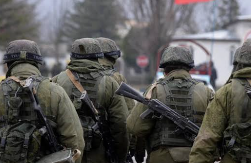

Uganda’s parliament voted Thursday to authorize the possible deployment of its armed forces to Gaza, joining a multinational stabilization force being assembled as part of U.S. President Donald Trump’s ceasefire framework for the territory.
Defence Minister Kiryowa Kiwanuka told lawmakers that Trump had reached out to President Yoweri Museveni through intermediaries in July to request Uganda’s participation. He said Kampala’s readiness to contribute was formally communicated following that outreach, and that a status of forces agreement would follow the parliamentary vote.
The session marked the first time Uganda has publicly confirmed it might join the effort. An Israeli official said last month that troops from countries considered friendly to Israel, including Uganda, could be folded into the force once deployed.
Kiwanuka pointed to Uganda’s extensive record in regional peacekeeping — including missions in Somalia, South Sudan and the Central African Republic — as evidence the country’s military is equipped for the assignment.
Not all lawmakers were convinced. Opposition MP Hassan Kirumira warned the move could create diplomatic complications given Uganda’s membership in the Organization of Islamic Cooperation, and pressed ministers to clarify which side Ugandan forces would effectively be supporting on the ground. Another lawmaker, John Nambeshe, said he backed the idea in principle but wanted an assessment of past peacekeeping missions before troops were committed to what he called a high-risk environment.
The proposed force, first outlined by Trump’s Gaza planning body in February, is expected to number around 20,000 personnel once fully assembled and would be commanded by U.S. Maj. Gen. Jasper Jeffers. Under the broader peace plan, the stabilization force would deploy to areas outside Israeli military control only after a phased Israeli withdrawal is completed — a process that has yet to begin in earnest.
Morocco has also pledged troops to the mission, though the timeline for any deployment remains unclear. Gaza remains largely devastated after nearly two years of war that followed Hamas-led attacks on Israel in October.