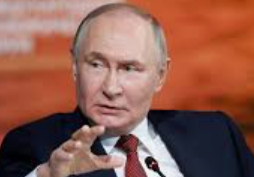
Russian President Vladimir Putin has cautioned that escalating tensions in the Middle East could inflict
economic damage on a global scale comparable to the disruption caused by the COVID-19 pandemic, underscoring growing concerns about the fragility of the international economic system.
Speaking amid intensifying geopolitical uncertainty, Putin suggested that the crisis risks triggering a chain reaction across critical sectors, including energy, trade, and supply networks. While fundamentally different in origin from a public health emergency, the conflict’s potential to disrupt multiple pillars of the global economy simultaneously has drawn parallels with the systemic shock experienced during the pandemic.
At the center of these concerns lies the Middle East’s pivotal role in global energy markets. The region accounts for a significant share of the world’s oil and gas supply, and any sustained disruption—particularly to key transit routes—could send energy prices sharply higher. Such increases would likely reverberate across industries, raising production and transportation costs while fueling inflation worldwide.
Beyond energy, supply chains remain highly vulnerable. The pandemic exposed structural weaknesses in global logistics systems, and a prolonged conflict could once again strain the movement of essential goods, from food and fertilizer to medical supplies. Even economies geographically distant from the region could experience shortages, delays, and rising costs.
Economists are also warning of the risk of stagflation—a scenario characterized by slowing economic growth combined with persistent inflation. This combination presents a complex challenge for policymakers, limiting their ability to stimulate growth without exacerbating price pressures.
Although Putin’s remarks carry political weight, the underlying concerns are echoed by international institutions and market analysts. Recent forecasts have already begun to reflect downward revisions in global growth prospects alongside heightened inflation risks, driven in part by geopolitical instability.
Ultimately, the warning highlights a broader reality: in an interconnected global economy, regional conflicts can rapidly evolve into worldwide economic disruptions. Whether the current crisis reaches the scale of the COVID-19 shock will depend on its duration, intensity, and the resilience of global markets—but the risks are increasingly difficult to ignore.