The United States’ decision to send a second aircraft carrier to the Middle East is one of the clearest
signals in recent months that Washington is preparing for a period of sharper strategic uncertainty in a region already burdened by overlapping crises. Aircraft carriers are not simply floating military platforms; they are among the most powerful symbols of American force projection, diplomacy, and deterrence. When the U.S. Navy deploys one carrier strike group to a sensitive area, it attracts attention. When it sends two, the message becomes impossible to ignore.
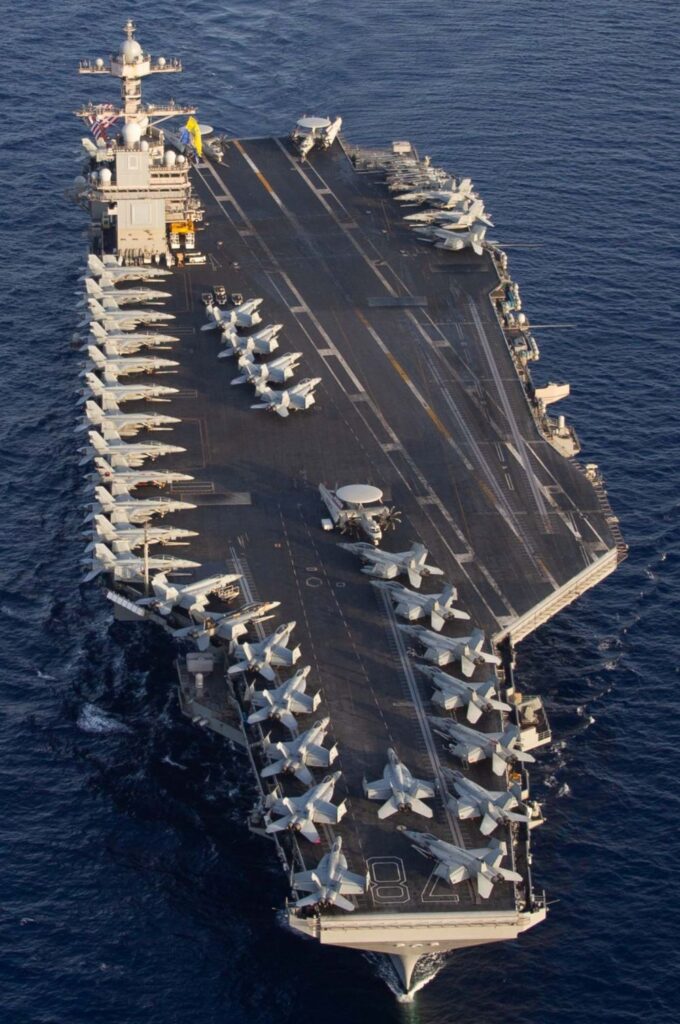
Reports indicate that the USS Gerald R. Ford is being directed toward the Middle East to join another carrier already operating in the region. This move comes at a time of heightened tensions with Iran, continuing instability across several regional flashpoints, and delicate political calculations in Washington and among U.S. allies. While American officials have not always provided detailed public explanations in real time, the strategic logic behind such deployments is rarely accidental. The arrival of a second carrier expands U.S. military capability dramatically, but it also underscores how fragile the current security environment has become.
The Middle East has long been a theater where U.S. power is both tested and demanded. From the Persian Gulf to the Red Sea, from Iraq and Syria to the Eastern Mediterranean, American interests have been tied to energy routes, counterterrorism operations, the security of allies, and the prevention of hostile powers gaining dominance. Aircraft carriers play a central role in this posture because they offer something few other assets can: the ability to launch sustained air operations without relying on land bases that may be politically sensitive or geographically vulnerable.
A carrier strike group is far more than the carrier itself. It typically includes guided-missile cruisers, destroyers, submarines, and logistical support ships, forming a self-contained force capable of defending itself while conducting offensive operations. In practical terms, this means the United States can respond rapidly to emerging threats, reassure partners, and deter adversaries. In symbolic terms, it signals seriousness. It is one thing to issue warnings in diplomatic language; it is another to move a carrier into striking distance.
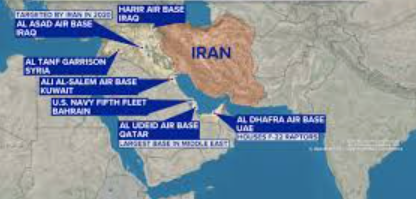
The timing of this deployment is particularly important. U.S.-Iran tensions remain a central factor shaping regional security. Iran’s nuclear program, its missile capabilities, and its network of allied militias across the region have been a persistent concern for Washington and its partners. Negotiations over Iran’s nuclear activities have fluctuated between cautious engagement and deadlock, and moments of escalation have repeatedly raised fears of miscalculation. In this environment, the presence of two U.S. carrier strike groups may be intended to strengthen deterrence, signaling that the United States is prepared for a range of outcomes even as diplomatic channels remain open.
President Trump has expressed interest in reaching some form of understanding with Tehran, but the deployment highlights a parallel reality: diplomacy is often conducted alongside military preparation. In many ways, this is a familiar pattern in U.S. strategy. Military assets are moved not only for warfighting purposes but also to shape the negotiating environment. The logic is straightforward: credible deterrence can reduce the temptation for adversaries to escalate and can reassure allies who might otherwise take unilateral steps.
The move also reflects broader regional volatility. The Middle East today is marked by interconnected crises that do not remain confined within national borders. Conflicts involving armed non-state groups, maritime security threats, drone and missile attacks, and the spillover effects of wars have created an atmosphere in which escalation can occur quickly. The Red Sea shipping disruptions, tensions involving Israel and its neighbors, and persistent instability in Iraq and Syria all contribute to an environment where the United States feels pressure to maintain readiness.
Sending a second carrier is therefore not simply about one adversary or one issue. It is about maintaining strategic flexibility. Carriers provide options. They allow Washington to respond to multiple contingencies, whether that involves protecting shipping lanes, conducting air patrols, supporting allies, or preparing for worst-case scenarios. In a region where threats can emerge with little warning, having additional naval airpower nearby is a form of insurance.
At the same time, the deployment raises important questions about escalation dynamics. While the United States may view the move as defensive and stabilizing, adversaries may interpret it differently. Iran, for example, could see the arrival of additional U.S. forces as a provocation or as preparation for coercive action. History shows that military buildups can sometimes increase the risk of misinterpretation, especially when communication channels are strained. Deterrence works best when signals are clear and when all sides understand the costs of escalation. But deterrence is never foolproof.
The presence of two carrier strike groups is also unusual because of the sheer resource commitment involved. The U.S. Navy has global responsibilities, and carriers are in high demand across multiple theaters, including the Indo-Pacific, where competition with China remains the top long-term strategic priority. Deploying additional carriers to the Middle East reflects the reality that crises in one region can pull resources away from another. It highlights the challenge of managing simultaneous pressures in an increasingly complex international system.
For U.S. allies in the region, the deployment is likely to be welcomed as reassurance. Partners who feel exposed to Iranian missile threats or militia activity often look to Washington for tangible demonstrations of support. The arrival of a carrier can strengthen confidence, reduce uncertainty, and discourage adversaries from taking aggressive steps. Israel’s leadership, for instance, has historically supported strong American pressure on Tehran, and Gulf states remain deeply concerned about regional power balances.
Yet reassurance comes with its own complications. Allies may interpret increased U.S. presence as a green light for tougher policies, potentially emboldening actions that could contribute to escalation. One of the enduring dilemmas of deterrence is that while it can prevent aggression, it can also encourage risk-taking among those who feel protected. Managing alliance expectations is therefore a critical part of American strategy.
Domestically, such deployments also carry political weight. Aircraft carriers are visible symbols of national strength, and administrations often face pressure to appear decisive in moments of international tension. But military deployments are not cost-free. They require enormous logistical support, they strain personnel, and they create the potential for direct confrontation. The decision to send a second carrier suggests that U.S. leaders believe the risks of not acting outweigh the risks of acting.
From a global perspective, the move underscores the Middle East’s continued strategic relevance despite repeated predictions that the United States would pivot away. While Washington has sought to reduce its footprint and encourage regional partners to take more responsibility for their own security, events have repeatedly drawn the U.S. back in. The region remains a crossroads of global energy markets, trade routes, and geopolitical rivalries. The deployment of additional naval power is a reminder that the Middle East is still deeply entangled in broader international security calculations.
The coming weeks will reveal more about how this deployment shapes regional behavior. If tensions ease, the carriers may serve primarily as a deterrent backdrop, a show of force that helps prevent escalation. If tensions rise, they could become central assets in crisis response. Either way, the decision reflects an increasingly unstable strategic environment where the United States feels compelled to maintain strong military options.
In the end, sending a second aircraft carrier to the Middle East is about more than ships and aircraft. It is about signaling, deterrence, alliance management, and the balance between diplomacy and preparedness. It highlights how quickly regional tensions can intensify and how the United States continues to rely on its naval power as both a tool of reassurance and a warning to adversaries. The deployment may be intended to prevent conflict, but it also serves as a reminder that the region remains one of the world’s most volatile arenas, where the line between deterrence and escalation is always thin.