THE BUSINESS FRONTIER

Where Capital, Commerce And Economic Power Converge
US approves 879,000 advanced AI chips for Chinese firms

Table of Content

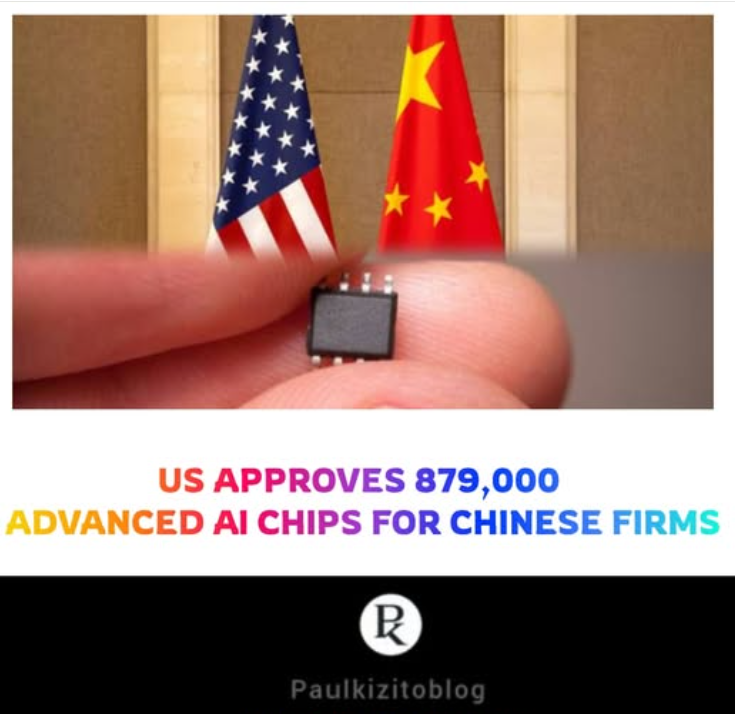
The U.S. government approved export licences for about 879,000 advanced AI chips destined for Chinese companies over six months, according to figures released by a House committee, including shipments to firms the Pentagon lists as linked to China’s military.

The House Foreign Affairs Committee said on Thursday that the Commerce Department’s Bureau of Industry and Security cleared the chips between December 2025 and May 2026. They were Nvidia H200 and AMD MI325X processors. Applicants had asked for permission to ship 3.4 million chips, so roughly a quarter of the volume sought was approved.

Approvals included 150,000 chips for Tencent, 75,000 for Alibaba, 43,000 for Baidu and 4,000 for BYD. All four appear on the Defense Department’s list of Chinese military companies. The records do not show how many of the approved chips were actually delivered.

The licences followed President Donald Trump’s decision in December 2025 to let Nvidia sell its H200 chip to approved customers in China. The H200 is not the company’s most advanced product, and its newer Blackwell and Rubin lines were excluded.

The disclosure has sharpened criticism in Congress, where lawmakers in both parties have argued that export-control law needs tightening. Chris McGuire, a former U.S. official who works on technology competition with China, called the share of approvals going to military-designated firms astonishing and questioned how thoroughly national security reviews were carried out.

The figures emerged days after the Commerce Department announced new rules on Nov. 16 to restrict Chinese firms’ access to advanced chips housed in overseas data centres, a route they had used when direct imports became harder. China has called those measures economic coercion and threatened countermeasures.

The administration has argued that selling less advanced chips keeps Chinese developers reliant on American technology, while critics say the shipments strengthen China’s AI and military capabilities. The release of the data is likely to add to pressure on Commerce to explain its licensing decisions.

support@paulkizitoblog.com

support@paulkizitoblog.com http://paulkizitoblog.com

Leave a Reply

Your email address will not be published. Required fields are marked *

Recent News

Trending News

Editor's Picks

US approves 879,000 advanced AI chips for Chinese firms

The U.S. government approved export licences for about 879,000 advanced AI chips destined for Chinese companies over six months, according to figures released by a House committee, including shipments to firms the Pentagon lists as linked to China’s military. The House Foreign Affairs Committee said on Thursday that the Commerce Department’s Bureau of Industry and Security cleared the chips between December 2025 and May 2026. They were Nvidia H200 and AMD MI325X processors. Applicants had asked for permission to ship 3.4 million chips, so roughly a quarter of the volume sought was approved. Approvals included 150,000 chips for Tencent, 75,000 for Alibaba, 43,000 for Baidu and 4,000 for BYD. All four appear on the Defense Department’s list of Chinese military companies. The records do not show how many of the approved chips were actually delivered. The licences followed President Donald Trump’s decision in December 2025 to let Nvidia sell its H200 chip to approved customers in China. The H200 is not the company’s most advanced product, and its newer Blackwell and Rubin lines were excluded. The disclosure has sharpened criticism in Congress, where lawmakers in both parties have argued that export-control law needs tightening. Chris McGuire, a former U.S. official who works on technology competition with China, called the share of approvals going to military-designated firms astonishing and questioned how thoroughly national security reviews were carried out. The figures emerged days after the Commerce Department announced new rules on Nov. 16 to restrict Chinese firms’ access to advanced chips housed in overseas data centres, a route they had used when direct imports became harder. China has called those measures economic coercion and threatened countermeasures. The administration has argued that selling less advanced chips keeps Chinese developers reliant on American technology, while critics say the shipments strengthen China’s AI and military capabilities. The release of the data is likely to add to pressure on Commerce to explain its licensing decisions. support@paulkizitoblog.com