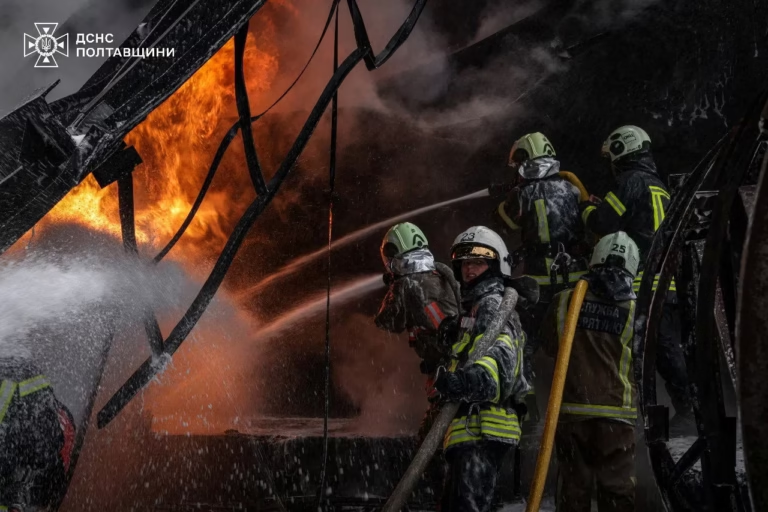
The United States and Iran exchanged fresh strikes overnight into Monday and issued conflicting claims over the status of the Strait of Hormuz, as a fragile ceasefire between the two countries continued to unravel.
US Central Command said American forces carried out a new round of attacks targeting Iranian air-defense systems, coastal radar sites, and missile and drone capabilities, aimed at degrading Tehran’s ability to threaten shipping through the strait. Iran’s Revolutionary Guard said it responded with missile and drone strikes on US military bases in Kuwait, Bahrain, Jordan, Oman and Qatar, describing the attacks as retaliation for the renewed US bombing campaign. Bahrain’s interior ministry reported air raid sirens sounding for a third time on Monday.
The two sides remain sharply divided over whether the strait is actually passable. Iran’s Persian Gulf Strait Authority said transit remains “not possible,” citing what it called illegal movements by US Central Command, and said permits would only be reviewed once stability is restored. President Trump and US Central Command insist the waterway is open, with the Joint Maritime Information Center saying a southern shipping route hugging Oman’s coast remains available for two-way traffic. Vessel tracking data showed shipping activity had slowed to a trickle over the weekend regardless.
The clash follows Iranian strikes on commercial tankers in Omani waters last week, which the US said violated the ceasefire terms of last month’s memorandum of understanding. Washington responded with three successive rounds of strikes this week, hitting more than 300 targets combined, according to US officials. Iranian parliament speaker Mohammad Bagher Ghalibaf accused Washington of breaking its word, citing a clause in the memorandum related to reopening the strait.
Oil prices jumped on the news, with Brent crude rising more than 4% to trade above $79 a barrel and US crude gaining a similar amount to trade near $74, though both remain well below the wartime peaks above $120 a barrel reached earlier this year. Diplomatic efforts continued in parallel, with Iranian Foreign Minister Abbas Araghchi traveling to Muscat to meet Omani officials, who have proposed managing strait traffic through two separately controlled routes as a possible way to de-escalate the standoff.