
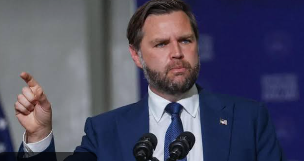
Vice President JD Vance said Wednesday that certain elements within Israel’s government are working to manipulate American public opinion in order to prolong the war with Iran indefinitely, in some of his most pointed public criticism yet of Israeli influence over US policy.
Speaking in a three-hour interview with podcaster Joe Rogan, Vance said he knows “beyond a shadow of a doubt” that some within Israel’s political system are trying to shift American opinion toward continuing military operations against Iran without any specific objective, rather than pursuing a negotiated settlement. He described it as a deliberate, well-funded campaign involving social media activity and leaks to reporters, aimed specifically at undermining the ceasefire negotiations he helped broker.
Vance’s remarks followed a Time magazine report, published a day earlier, alleging that Trump’s former campaign manager Brad Parscale received funding tied to Israeli government sources to run an operation targeting conservative commentators critical of the ceasefire. Parscale has denied the funds were used to pay influencers criticizing Vance. Vance said he does not object to foreign governments, including Israel, Qatar or Russia, attempting to influence American opinion in general, but said it becomes a problem when such efforts start shaping US political judgment.
He stopped short of saying Israel pushed the US into war with Iran in the first place, saying Trump’s own belief that Iran should not obtain a nuclear weapon existed independently of any Israeli influence. Vance also said he saw divisions within Iran’s own leadership between pragmatists open to a deal and hardliners resistant to one.
The interview aired as the US carried out a fifth consecutive day of strikes on Iran, with the Wall Street Journal separately reporting Trump was weighing further escalation, including deploying ground forces near the Strait of Hormuz or striking a suspected nuclear-linked mountain facility. Vance’s comments add to a series of increasingly public disagreements between Washington and Israel over how to handle the conflict.










