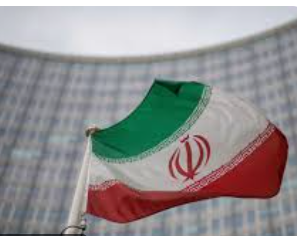
Iran’s leadership has issued a pointed warning to university students, cautioning them not to cross “red lines” as protests re-emerge on campuses across the country. The message, delivered amid heightened
tensions with the United States, reflects a government attempting to contain domestic unrest while navigating an increasingly volatile geopolitical landscape.
Student activism has long been one of the most politically sensitive pressure points in Iran. Universities have historically served as incubators of reformist thought and organized dissent, particularly during moments of economic hardship or political strain. The latest demonstrations suggest that simmering frustrations among young Iranians have once again reached the surface.
A Familiar Flashpoint
Campus protests in Iran are rarely isolated events. They tend to reflect deeper structural grievances — inflation, unemployment, political restrictions, and perceived social stagnation. For many students, especially in urban centers like Tehran, Mashhad, and Isfahan, economic pressures have become inseparable from broader questions about governance and civil liberties.
The current unrest appears driven by a mix of economic anxiety and political frustration. Youth unemployment remains high. Inflation continues to erode purchasing power. International sanctions limit economic mobility. For a generation raised in the digital era but constrained by domestic controls, the gap between global awareness and local reality is increasingly difficult to ignore.
Authorities have acknowledged the demonstrations but emphasized boundaries. Officials insist that peaceful expression is acceptable — provided it does not challenge what they describe as the state’s “core principles.” Acts deemed disrespectful toward national symbols or the political system, they warn, will provoke consequences.
The phrase “red lines” carries particular weight in Iran’s political vocabulary. It signals that while limited dissent may be tolerated, overt challenges to state legitimacy will not.
The U.S. Factor
The timing of the protests adds a layer of complexity.
Relations between Iran and the United States remain deeply strained. Disputes over Tehran’s nuclear program, regional military activity, and economic sanctions continue to define bilateral hostility. Washington has signaled that it is monitoring developments closely, while Iranian officials accuse foreign powers of attempting to exploit domestic unrest.
This external tension shapes the state’s internal response. Iranian leaders frequently frame protests within the narrative of foreign interference, arguing that adversaries seek to destabilize the country from within. Whether or not such claims resonate broadly, they provide political justification for security measures.
For student demonstrators, however, the grievances voiced appear rooted in domestic realities rather than geopolitical strategy. Rising living costs and limited social mobility are immediate concerns that transcend international diplomacy.
Generational Frustration
Iran is a young country. A significant portion of its population is under the age of 35. Many of these citizens were born long after the 1979 revolution that established the Islamic Republic. Their political reference points differ markedly from those of older generations.
While earlier waves of activism were often shaped by ideological reform movements, today’s student protesters tend to articulate demands in practical terms: economic opportunity, social freedoms, and institutional accountability.
Digital connectivity plays a crucial role. Despite restrictions, many young Iranians access global discourse through social media platforms and encrypted messaging apps. Exposure to international lifestyles and political systems has intensified expectations.
The state, meanwhile, continues to balance between reform rhetoric and institutional rigidity. Limited reforms have periodically been introduced, but structural transformation remains tightly controlled.
Security Versus Legitimacy
Iran’s leadership faces a delicate equation. A heavy-handed crackdown risks reigniting nationwide unrest and drawing international condemnation. A permissive stance, on the other hand, could embolden broader opposition movements.
By invoking “red lines,” officials appear to be attempting a calibrated approach — discouraging escalation without immediately deploying maximal force.
Security forces have maintained a visible presence around university campuses. Internet disruptions have been reported intermittently, a tactic used previously to limit mobilization. Yet so far, authorities have avoided mass arrests on the scale seen in earlier crackdowns.
Whether this reflects strategic restraint or temporary caution remains uncertain.
Economic Pressure Points
At the heart of the protests lies the economy.
Years of sanctions have restricted foreign investment and complicated trade channels. Currency volatility has weakened household purchasing power. Subsidy reforms and price increases have hit lower- and middle-income families particularly hard.
Students — often dependent on family support or part-time work — feel these pressures acutely. Graduates entering a constrained job market face limited prospects, especially outside government-affiliated sectors.
The government has announced economic initiatives aimed at domestic production and regional trade expansion. Yet structural challenges, including bureaucratic inefficiency and global isolation, limit the pace of recovery.
For young Iranians, promises of long-term resilience may not alleviate immediate hardship.
Regional Implications
Domestic instability in Iran carries regional consequences.
The country plays a central role in Middle Eastern geopolitics, with influence extending into Iraq, Syria, Lebanon, and Yemen. Any internal upheaval has the potential to alter strategic calculations across the region.
At the same time, Iranian officials are acutely aware that visible unrest may embolden adversaries. Maintaining internal cohesion is therefore not only a matter of domestic governance but also of strategic signaling.
Observers note that Iran’s leadership often prioritizes continuity and stability over rapid reform. This preference shapes both foreign and domestic policy responses.
The Road Ahead
The trajectory of the current protests remains unclear.
Student movements in Iran have historically ebbed and flowed. Some have evolved into broader national demonstrations; others have dissipated under security pressure and academic discipline measures.
Much will depend on whether grievances expand beyond campuses into labor sectors or urban neighborhoods. It will also hinge on how authorities respond in the coming days.
If officials maintain a controlled but restrained posture, the protests may gradually subside. If confrontations intensify, the unrest could widen.
Meanwhile, negotiations and tensions with the United States continue to simmer in the background. Any escalation on the geopolitical front could influence domestic calculations — either hardening the government’s stance or shifting public focus outward.
A Moment of Testing
Iran stands at a crossroads shaped by generational change, economic pressure, and geopolitical rivalry.
For students chanting on university grounds, the demands are immediate and personal. For policymakers in Tehran, the stakes are systemic and strategic.
The warning about “red lines” underscores a state determined to preserve authority. The persistence of protests reveals a society wrestling with expectations and constraints.
Between these forces lies an uncertain path — one that will determine whether Iran’s next chapter is defined by gradual adaptation or renewed confrontation.