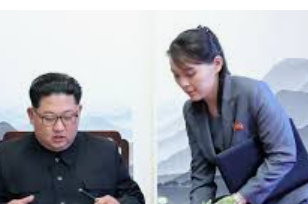
In a carefully choreographed political shift, Kim Jong Un has elevated his sister, Kim Yo Jong, to a more senior leadership role within the ruling Workers’ Party of Korea, as he pledged a renewed push to strengthen the country’s struggling economy.
The announcement came during a major party gathering in the capital, where Kim Jong Un reaffirmed his leadership and outlined economic priorities for the coming years.
Consolidating Power Within the Inner Circle
Kim Yo Jong has long been considered one of the most influential figures in Pyongyang’s political hierarchy. Her latest promotion formalizes what many analysts already believed: that she is a central pillar of the regime’s power structure.
In North Korea’s tightly controlled political system, family loyalty and elite consolidation remain critical to stability. By strengthening his sister’s institutional authority, Kim Jong Un appears to be reinforcing continuity within the ruling circle amid economic and geopolitical pressures.
Observers say the move signals both trust and strategic positioning — ensuring that key levers of propaganda, party organization, and possibly foreign messaging remain firmly within the Kim family’s influence.
A Renewed Economic Pledge
Alongside the leadership reshuffle, Kim Jong Un vowed to intensify efforts to boost economic development.
North Korea’s economy continues to face significant strain due to international sanctions tied to its nuclear weapons program, border disruptions in recent years, and long-standing structural inefficiencies within its centralized economic system.
In his address, Kim emphasized modernization of industry, agricultural reform, and improvements in living standards — themes that have featured prominently in past policy announcements but have yielded mixed results.
While military advancement remains a core pillar of state policy, the renewed economic focus suggests Pyongyang is seeking greater domestic stability through gradual development rather than relying solely on strategic deterrence.
Regional and Global Implications
The developments unfold against a complex regional backdrop. Relations between North Korea and South Korea remain tense, while ties with the United States are largely frozen. Meanwhile, China remains Pyongyang’s most significant economic and diplomatic partner.
Kim Yo Jong has previously played visible roles in inter-Korean diplomacy and international messaging. Her enhanced status could influence how North Korea shapes its external communications — whether toward confrontation or limited engagement.
What Comes Next?
North Korea’s leadership changes often signal subtle shifts rather than dramatic transformation. The promotion of Kim Yo Jong consolidates familial authority, while Kim Jong Un’s economic pledges attempt to project forward momentum.
The key question remains whether policy adjustments will translate into tangible improvements for ordinary North Koreans — or whether the announcements primarily serve to reinforce internal cohesion within one of the world’s most centralized political systems.
For global observers, the message is clear: Pyongyang is tightening its internal structure while signaling cautious economic ambition — a dual strategy aimed at resilience in an uncertain international environment.