Nigeria is positioning itself to draw significantly from a €59 million European Union ocean governance
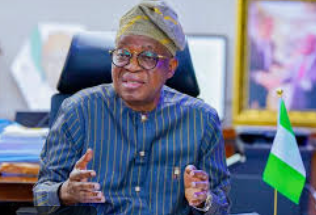
programme, with the Minister of Marine and Blue Economy, Dr. Adegboyega Oyetola, hosting EU Ambassador Gautier Mignot in Abuja to discuss how the country can maximise its share of the funding.
The programme at the centre of the discussions — the West Africa Sustainable Ocean Programme, known as WASOP — is a regional EU initiative running from 2024 to 2030 that spans twelve West African coastal nations. Its primary focus is combating illegal, unreported and unregulated fishing, improving fisheries monitoring, and strengthening the broader governance of ocean resources across the Gulf of Guinea. Nigeria, as the region’s largest economy and one of its most strategically significant maritime nations, has a compelling case for a substantial portion of the available technical and financial support.
The stakes are not trivial. Illegal fishing in Nigerian and broader Gulf of Guinea waters is not simply an environmental concern — it is an economic one with direct consequences for millions of coastal households whose livelihoods depend on fish stocks that are being systematically depleted by foreign and unregulated vessels operating beyond the reach of effective enforcement. Oyetola described it as a major threat to marine ecosystems, food security, and the economic wellbeing of coastal communities — framing that reflects how the ministry has sought to elevate the blue economy beyond a niche portfolio into a national development priority.
What Nigeria is specifically seeking from the EU goes beyond funding. The minister pressed for increased technical assistance in surveillance systems and fisheries monitoring — acknowledging, in effect, that the country currently lacks the enforcement infrastructure to police its own waters adequately. Drones, satellite tracking, vessel monitoring systems, and the training of personnel to operate them are the practical tools that transform a legal framework on paper into actual deterrence at sea.
The meeting also touched on a broader ambition. Oyetola used the occasion to push for cooperation that extends beyond piracy — the traditional frame through which Gulf of Guinea maritime security has been understood — to encompass environmental crimes and human trafficking, both of which flow through the same ungoverned maritime spaces that illegal fishing exploits.
Ambassador Mignot, for his part, affirmed the EU’s commitment to the partnership and described WASOP as central to the bloc’s long-term vision for sustainable ocean governance across West Africa. Whether Nigeria translates that goodwill into a concrete and sizeable allocation from the programme will depend on how effectively Abuja engages with the WASOP framework over the coming months — and whether the institutional capacity exists within the ministry to absorb and deploy the support effectively once it arrives.