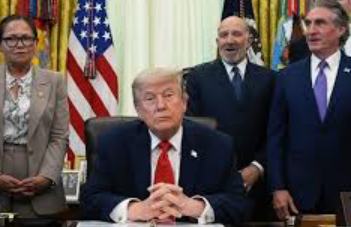
President Donald Trump abruptly halted a planned military assault on Iran Thursday evening, declaring
that negotiations had reached and received approval from senior Iranian leadership, and that a formal peace agreement would be signed within days. The announcement triggered an immediate rally in global stock markets and a sharp drop in oil prices.
The reversal was striking in its speed. Earlier in the day Trump had issued some of his most aggressive warnings yet, threatening devastating strikes and vowing to seize control of Iran’s oil infrastructure, including its main export terminal. Military assets were already in position and within hours of executing the mission when he posted the cancellation on Truth Social.
Tehran Unmoved by Trump’s Claim
Iranian authorities declined to validate Trump’s account, saying publicly that no final decision had been taken. State media in Tehran offered a competing narrative, suggesting it was Washington that had ultimately come around to accepting Iran’s terms — a framing the White House did not address directly.
People familiar with the negotiations said meaningful progress had been made in the preceding 24 hours, with Qatari mediators playing a central role in bridging gaps between the two sides.
A Regional Deal in the Making
Trump described the emerging agreement as one backed by a broad coalition, naming more than a dozen countries including Israel, Saudi Arabia, the UAE, Turkey, Qatar, Pakistan, Egypt and Jordan as parties to the understanding. The Israeli prime minister’s office confirmed contact with Trump and indicated satisfaction that any final deal would constrain Iran’s nuclear ambitions, even though Israel is not formally part of the negotiations.
The proposed terms, as described, would extend the ceasefire currently in effect, allow commercial vessels to resume passage through the Strait of Hormuz, and initiate a structured 60-day negotiation on Iran’s nuclear program.
Blockade Remains
The US naval blockade imposed on Iran remains fully operational. Trump made clear it will stay in place until a deal is signed and documents are finalized. Qatar’s government separately confirmed its role in facilitating the diplomatic push, with its leadership expressing support for resolving the dispute through dialogue.
How the Conflict Began
The war started on February 28 when American and Israeli forces conducted a sweeping joint air campaign, striking Iranian military sites, government facilities, and senior leadership in close to 900 sorties over a 12-hour period. Supreme Leader Ali Khamenei was among those killed. Iran responded with widespread missile and drone attacks targeting American military positions and allied infrastructure across the Middle East, while simultaneously restricting navigation through the Strait of Hormuz.
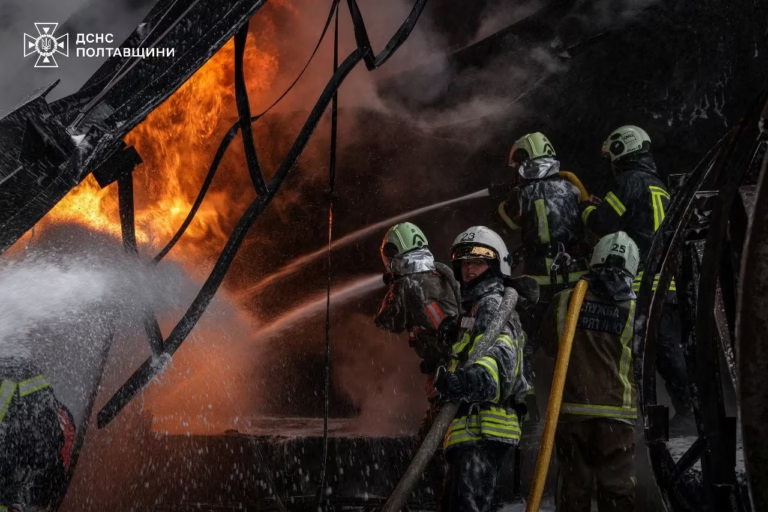
A ceasefire was announced but proved unstable. Tensions reignited this week after Iran was accused of shooting down a US Army Apache helicopter near the strait, prompting two consecutive days of American strikes before Thursday’s sudden halt.
The conflict has now stretched past 100 days. Whether Thursday’s announcement marks a genuine turning point or another false dawn remains to be seen.