
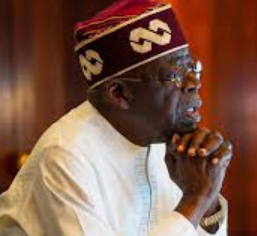
Nigeria is not waiting for Ebola to arrive at its door. President Bola Tinubu moved on Tuesday to get ahead of a threat that has already consumed two of Africa’s neighbours, approving ₦10 billion in emergency funding and establishing a dedicated presidential task force to coordinate the country’s response to the outbreak spreading rapidly through the Democratic Republic of Congo and Uganda.
The scale of the intervention reflects the seriousness with which Abuja is treating the risk. The money — roughly $7.35 million — goes directly to strengthening the operational capacity of the Nigeria Centre for Disease Control and Prevention, the agency that would be the first line of response if the virus crossed Nigeria’s borders. The funds are also earmarked to support public health emergency response activities at the national level, covering the surveillance, logistics, and human resources that determine whether an outbreak is contained in its early stages or allowed to spread.
The Presidential Task Force will be chaired by the Chief of Staff, Femi Gbajabiamila — a signal that this is being treated as a matter of national security rather than a narrow health ministry concern. Membership will be drawn from relevant ministries, departments, and agencies, as well as state representatives, giving the body both federal authority and the reach to coordinate with governments on the ground.
Tinubu’s directive went beyond money and committee formation. He instructed every state hosting an international airport or major border corridor to immediately submit its preparedness plans and funding requirements to the task force for coordinated implementation. Enhanced passenger screening at international airports — temperature checks, crowd control protocols, and health declaration systems — is being intensified with immediate effect.
The urgency is not hypothetical. The Ebola outbreak in Ituri province in northeastern DRC has already claimed hundreds of lives, crossed into Uganda with confirmed cases in Kampala, and been declared a Public Health Emergency of International Concern by the World Health Organisation. What makes it particularly dangerous is the strain involved: Bundibugyo ebolavirus, a rarer variant for which there are no licensed vaccines and no approved treatments, and which evaded initial laboratory detection because testing kits were calibrated for the more common Zaire strain.
Nigeria has faced Ebola before. In 2014, the country successfully contained an outbreak that originated with a single infected traveller arriving in Lagos — a containment effort that the WHO described at the time as a sterling example of what could be achieved with swift and coordinated action. That history informs both the confidence and the caution with which Abuja is approaching the current threat. The country knows it can respond. It also knows, from 2014, exactly how quickly a single airport arrival can become something far harder to control.










