THE BUSINESS FRONTIER
Where Capital, Commerce And Economic Power Converge
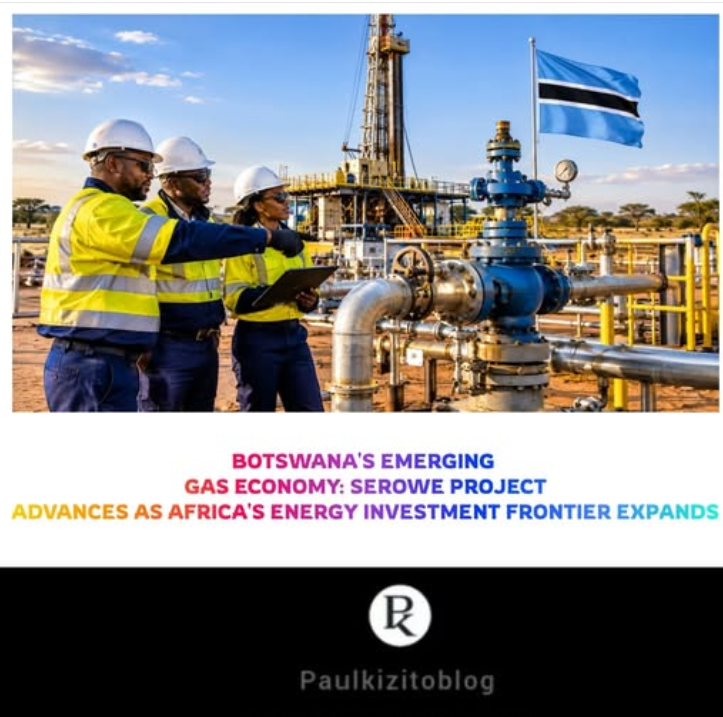
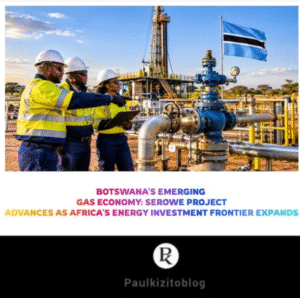
Botswana’s first attempt at commercial gas production is moving from drilling to testing at the Serowe coal bed methane project, as the country seeks a domestic fuel source in a region facing gas shortages.
Botala Energy, an Australian-listed company, owns 100% of the project in the Karoo-Kalahari Basin, about 40 km from Serowe in central Botswana. It reported that one well in its pilot cluster, Serowe-3.5B, has produced gas continuously since Sept. 20. Output has reached around 28 thousand cubic feet a day, equal to about 30 gigajoules daily, which is still below the 70 gigajoules a day the company has set as its pilot benchmark. Gas appeared earlier in the dewatering process than expected, though the company has yet to show sustained commercial flow from the wider five-well cluster, known as Project Pitse.
The project targets coal seams at depths of roughly 360 to 490 metres. Botala holds an independently certified resource of 400 billion cubic feet in the 2C category. Full development of 108 wells is planned to yield about 3.5 petajoules of liquefied natural gas a year, or roughly 200 tonnes a day, in four phases.
Commercial arrangements have begun to take shape. Botala signed a binding letter of intent in March 2025 to supply up to 3.5 petajoules a year of LNG to South Africa’s Scaw Metals, with an option to raise that to 4.7. The Botswana government, through the Minerals Development Company of Botswana, agreed to take a 15% stake in the project for 35 million pula, plus a 1% royalty on future LNG output. The company had targeted a final investment decision in the second half of 2026, which now depends on proving sustained commercial gas flow, certifying reserves and securing financing and offtake agreements.
Environmental questions remain. Authorities approved gas exploration for commercial purposes in January 2026, but an application for downstream gas processing, submitted on Jan. 26, had not been approved as of May, according to an investigation by journalism group Oxpeckers. Critics have raised concerns about water use during dewatering, possible groundwater contamination and methane leakage, arguing that high leakage could make the gas as damaging to the climate as the coal-fired power Botswana already uses. A technical review has noted that key data on permeability and water flow have not been published.
The broader opportunity is considerable. The U.S. Geological Survey has estimated a mean of 4.5 trillion cubic feet of undiscovered, technically recoverable coalbed gas across the Kalahari Basin, which spans Botswana, Zambia and Zimbabwe. Botala says its project could help ease a growing gas shortage in southern and central Africa.