THE BUSINESS FRONTIER
Where Capital, Commerce And Economic Power Converge
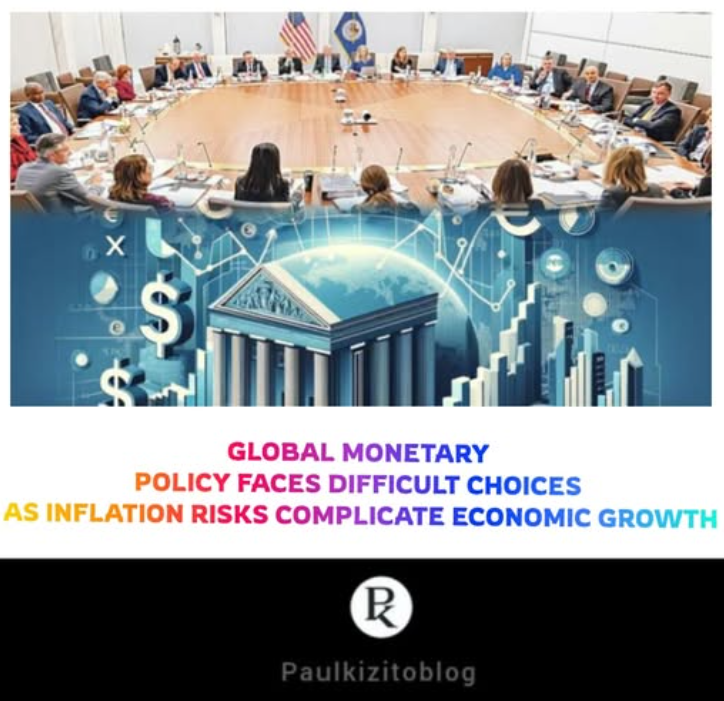
Major central banks are raising interest rates or preparing to do so as energy-driven inflation proves more persistent than expected, forcing policymakers to accept the risk of weaker growth in exchange for restoring price stability.
The clearest signal came from the United States. Minutes of the Federal Reserve’s Oct 28 meeting, published on Wednesday, showed that nearly all officials expect a quarter-point increase in December. Some had favoured a rise in October, and two raised the possibility of a half-point move. The Fed lifted rates in September for the first time in three years and held in October, with two members dissenting in favour of a hike.
Governor Christopher Waller has argued for a larger half-point increase in December and said the Fed should win back the three rate cuts delivered last year, warning that inflation has stayed above target for almost six years. St. Louis Fed President Alberto Musalem said the economy would probably need several increases before spring 2027. Chair Kevin Warsh has declined to give forward guidance, saying it would tie the Fed to a set path, and has rejected suggestions from President Donald Trump, who wants lower rates, that policymakers are acting for political reasons.
Futures markets put the probability of a quarter-point hike at the Dec 8-9 meeting at about 95%, with the remainder on a half-point rise, according to the CME Group’s FedWatch tool. Traders see the policy rate roughly 75 basis points higher in a year. Stronger-than-expected October consumer price data, released on Nov 10, drove the shift in expectations, and the dollar reached a 19-month high on Wednesday.
Other major economies have moved in step. The Bank of England raised Bank Rate to 4% on Nov 5 in an 8-1 vote, its first increase since August 2023, with one member favouring a larger rise to 4.25%. The Bank said UK inflation climbed to 3.5% in September and could approach 5% by mid-2027, citing the war in the Middle East and its effect on energy costs. It added that policy is not on a preset path, and its next decision is due on Dec 17. Reports on the UK housing market noted falling mortgage approvals as borrowing costs rose.
The Reserve Bank of Australia raised its cash rate to 4.85% on Nov 3, its fifth increase this year and the highest level since 2008, in a 6-3 vote. Inflation reached 4.3% in September, and the bank sees headline inflation staying above 3% until late 2027. Governor Michele Bullock said bringing inflation down would require subdued growth and higher unemployment.
The Bank of Canada lifted its key rate to 2.5% on Oct 28, its first increase in more than three years, and raised its 2027 inflation forecast to 3.1% from 2.0%. The Reserve Bank of New Zealand held at 2.75% in a narrow vote and signalled a high chance of a December hike. The Bank of Japan was expected to keep rates unchanged while indicating readiness to tighten further, and the Swiss National Bank has held its policy rate at zero.
The European Central Bank, which raised its main rate to 2.25% in September, held in October but warned that inflation risks were rising, in what markets read as a hawkish pause. It faces added complications from a widening risk premium on French government debt and from the announced early departure of President Christine Lagarde.
Energy prices remain the central variable. Brent crude settled at $93.14 a barrel on Tuesday, down about 20% this month but still elevated, as supply from the Gulf recovers while attacks on shipping continue. The International Monetary Fund has warned that the combination of costly energy and heavy investment in artificial intelligence is keeping inflation pressures high, and has urged central banks to stay cautious about easing.
Analysts said the divergence in recent decisions reflects differing exposure to energy imports and domestic price pressures. Some, including an LPL Financial economist, expect US inflation readings to improve in November and December, which could argue against larger moves, while still seeing policy tightening further in the first quarter of next year.