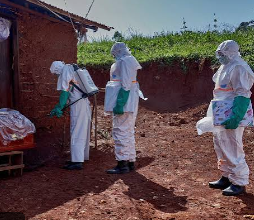
The number of confirmed Ebola cases in the Democratic Republic of Congo has risen to 3,200, including 1,405 deaths, government data showed on Sunday, as the country’s 17th Ebola outbreak continues to outpace the response on the ground.
The latest figures represent a rise of about 1,000 infections in just ten days, according to data released by Congolese authorities. The World Health Organization said nearly 90% of cases have been recorded in the northeastern province of Ituri, which borders Uganda and South Sudan, though the virus has now spread to five provinces in total, including two added in recent weeks.
The outbreak, declared on May 15, is caused by the Bundibugyo strain of the Ebola virus, for which there is no approved vaccine or treatment — a complication that has hampered the response, since existing Ebola vaccines and therapeutics were developed and certified against a different species of the virus, Zaire ebolavirus. Researchers at Oxford recently began early trials of a vaccine candidate targeting the Bundibugyo strain specifically, which scientists have described as a critical step toward a longer-term response tool, though not one likely to affect the current outbreak’s trajectory.
Public health officials have called the outbreak’s pace unprecedented. Government figures released days earlier showed the death toll climbing more than 40% in the space of five days, prompting Africa Centres for Disease Control and Prevention Director-General Jean Kaseya to warn that the epidemic could become the worst ever documented if not brought under control quickly. By comparison, the 2013–2016 West African Ebola epidemic, the deadliest on record with more than 11,000 deaths among at least 28,000 cases, took roughly eight months to reach its first 1,000 deaths; the current DRC outbreak has surpassed that toll in under ten weeks.
Officials say the response has been hindered by the difficulty of reaching Ituri’s remote front lines. Hedley Tah, an official with the United Nations Humanitarian Air Service, said the greater obstacle is often logistical rather than a shortage of willing responders, with flights needed to move medics, response teams and lab samples in and out of affected areas to maintain testing capacity. Authorities said improved detection and testing had also contributed to the rise in confirmed cases. Strikes by healthcare workers demanding unpaid wages have further disrupted containment efforts at some hospitals, adding delays to an already stretched response.
The WHO declared the outbreak a public health emergency of international concern on May 16. Ebola, which spreads through contact with infected bodily fluids and causes severe hemorrhagic fever, has killed more than 15,000 people across Africa over the past five decades.