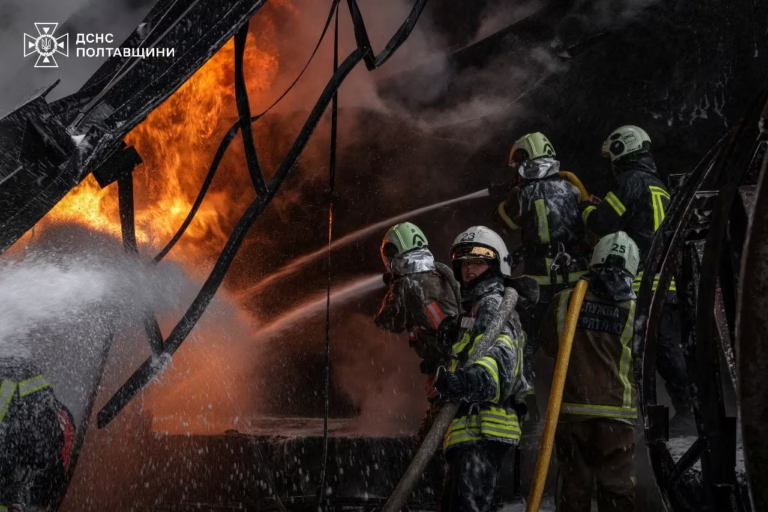
Yemen’s internationally recognized government said on Monday it was prepared for any escalation by the Houthi movement, after the Iran-aligned rebels claimed fresh drone strikes on Saudi Arabian oil infrastructure, in the clearest sign yet that a fragile 2022 truce between Riyadh and the Houthis is unraveling.
“At the end of the day, we are prepared for any escalations,” Yemen’s foreign minister designate, Afrah al-Zouba, told reporters in the Saudi capital. She said the strikes came hours after the Houthis reported launching new drone attacks on Saudi oil facilities, which the group described as retaliation for Saudi drone incursions into Yemeni territory.
Al-Zouba said Yemen’s government was increasingly concerned that the Houthis were seeking to replicate Iran’s campaign in the Strait of Hormuz by attempting to seize effective control over the Bab al-Mandeb Strait, the narrow waterway off Yemen’s coast that has become a critical route for Saudi oil exports since fighting largely shut down the Hormuz passage. She said the rebels were acting “in harmony” with Iran’s broader regional escalation and believed doing so would let them dominate the Red Sea.
The government official also described daily skirmishes between Houthi forces and government troops across multiple fronts inside Yemen, saying the security situation in the country was tense.
The exchange marks the first direct clash between Saudi Arabia and the Houthis in years, threatening a truce that took hold in 2022 and has largely held even after its formal terms expired. Tensions began escalating rapidly last week, when the Houthis declared a maritime blockade of Saudi Arabia and claimed missile and drone strikes on two Saudi oil tankers, prompting Saudi Arabia to strike Houthi-held Hodeidah in response. The Houthi-run foreign ministry warned at the time that the Saudi strikes would make “escalation for escalation” the defining pattern of the coming period.
Yemeni officials have said they intend to raise the Houthi attacks with the United Nations Security Council, seeking international censure of what they describe as violations of maritime law. The Gulf Cooperation Council has already condemned the tanker attacks.
Analysts tracking the conflict say Iran’s Revolutionary Guard is likely encouraging the Houthi campaign as a way to open a second pressure point against Gulf oil exports, complementing Tehran’s own confrontation with the U.S. and Israel in the Strait of Hormuz. The Houthis have separately rejected mediation proposals from Oman and Jordan aimed at restarting commercial flights out of Sanaa, insisting instead on routes operated by Iran’s Mahan Air — a demand Yemeni and Saudi officials say would force an uncomfortable choice between accepting an Iranian foothold in the country or blocking the flights outright.