For years, he was a ghost.
Hidden deep within the mountains of western Mexico, shielded by layers of loyal gunmen, encrypted communications, and an intelligence network that often outmaneuvered authorities, Nemesio Oseguera Cervantes — better known as “El Mencho” — built a reputation as one of the most elusive and dangerous drug traffickers in the world.
As leader of the Jalisco New Generation Cartel (CJNG), he transformed a regional criminal group into a transnational empire accused of flooding the United States with methamphetamine and fentanyl while orchestrating brutal campaigns of violence across Mexico.
For more than a decade, Mexican authorities — backed by U.S. federal agencies — pursued him relentlessly. A multimillion-dollar bounty hung over his head. Helicopter raids, special forces operations, and financial crackdowns all failed to capture him.
But in the end, according to officials familiar with the operation, it was not military force, advanced surveillance, or a rival cartel that brought him down.
It was romance.
The Untouchable Kingpin
Born in rural Michoacán, Oseguera Cervantes rose through the ranks of organized crime before breaking away to form CJNG around 2010. The group quickly distinguished itself through military-style discipline, heavy weaponry, and a willingness to directly confront state security forces.
By the late 2010s, CJNG had expanded into dozens of Mexican states and established trafficking corridors into North America, Europe, and Asia. The cartel became synonymous with brazen violence — including ambushes of police convoys and public displays of armed convoys showcasing military-grade rifles.
“El Mencho” cultivated an image of invisibility. He avoided public appearances. Communications flowed through trusted intermediaries. His security apparatus reportedly included counter-surveillance teams that monitored roads, checkpoints, and even local police radio frequencies.
Several high-profile attempts to detain him ended in dramatic shootouts. In 2015, a military helicopter was shot down during an operation targeting him — a chilling reminder of the cartel’s firepower.
Over time, he became Mexico’s most wanted fugitive.
A Vulnerable Link
According to investigators, the breakthrough came not from tracking weapons shipments or intercepting financial transfers — but from monitoring personal connections.
Law enforcement officials began noticing unusual travel patterns linked to someone believed to be romantically involved with the cartel leader. Unlike El Mencho, who rarely moved and relied on mountainous hideouts in Jalisco, this individual maintained contact with urban centers.
Investigators expanded surveillance. Phone metadata — not content, but movement signals — began painting a pattern. Meetings were brief but consistent. Locations shifted between safe houses in Guadalajara and remote ranches.
Authorities reportedly identified coded language embedded in otherwise mundane conversations. References to “family gatherings” and “celebrations” corresponded with spikes in encrypted device activity.
Romantic discretion, it appears, had created a crack in an otherwise impenetrable security shield.
The Operation
The final phase of the operation required coordination between Mexican federal forces, intelligence agencies, and international partners. Rather than launch a high-profile raid — which could trigger cartel retaliation — authorities opted for patience.
Surveillance tightened. Financial monitoring followed gift purchases and property transactions linked to the suspected relationship. Undercover operatives mapped the perimeter of rural properties connected to the network.
Then came confirmation.
Officials reportedly intercepted communication indicating that El Mencho would be present at a discreet gathering — one believed to involve close personal contacts rather than hardened lieutenants.
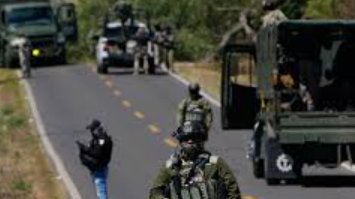
In a carefully timed move, special forces units surrounded the property in the early hours before dawn. Unlike previous operations, resistance was minimal. The element of surprise held.
Within hours, Mexico’s most wanted man was in custody.
Shockwaves Across Mexico
News of the capture reverberated nationwide.
For years, the CJNG had been considered one of the most powerful criminal organizations in the Western Hemisphere. Its operations stretched from synthetic drug laboratories in Mexico to distribution networks in major U.S. cities.
Markets reacted cautiously. Security analysts warned that cartel fragmentation can sometimes increase violence as rival factions compete for control.
Mexico’s president had long faced criticism over security policy, balancing social investment strategies with targeted enforcement. The arrest was quickly framed as a major victory for the Mexican state.
Internationally, U.S. authorities signaled readiness to pursue extradition proceedings, citing longstanding indictments related to drug trafficking and organized crime.
The Romance Factor
The revelation that a romantic relationship played a pivotal role in the operation has sparked debate.
Was it carelessness? Overconfidence? Or simply the inevitable human vulnerability of even the most hardened criminal?
Criminologists note that high-profile fugitives often rely on shrinking inner circles over time. As trust narrows, emotional dependence can grow. Romantic partners — even if carefully vetted — introduce unpredictability into rigid security systems.
History offers parallels. Organized crime figures from Latin America to Europe have been apprehended after contact with family members, lovers, or childhood friends exposed patterns authorities could exploit.
In this case, officials suggest it was not betrayal but routine interaction that created the opening. Consistency, not treachery, was the weakness.
What Happens to CJNG?
The arrest raises critical questions about the cartel’s future.
CJNG was built around centralized leadership but also cultivated semi-autonomous regional commanders. Some analysts believe the organization may fracture into competing factions. Others argue its institutional structure — logistics networks, financial pipelines, and international contacts — may allow it to survive leadership loss.
Cartel succession dynamics in Mexico have historically been volatile. The dismantling of one power center can produce temporary instability but does not automatically dismantle supply chains.
The broader drug trade — fueled by global demand — remains resilient.
A Symbolic Capture
El Mencho’s downfall carries symbolic weight.
For years, his evasion fed a perception that cartels operated beyond the reach of the state. His capture challenges that narrative, at least temporarily.
Yet experts caution against oversimplification. Arresting a kingpin does not eliminate structural drivers of organized crime: poverty, corruption, arms trafficking, and international drug consumption patterns.
What the episode reveals, however, is something more intimate — and perhaps more human.
Even the most feared criminal mastermind is not immune to personal connection.
The Human Paradox
In the mythology of organized crime, leaders cultivate images of ruthless detachment. They project control, secrecy, and omnipotence.
But control is fragile.
Romantic relationships demand presence, communication, and vulnerability — qualities fundamentally at odds with life as a fugitive warlord.
In seeking companionship, El Mencho may have momentarily stepped outside the fortress of paranoia that protected him for years.
That step proved decisive.
Looking Forward
Whether the arrest significantly weakens CJNG or merely reshuffles its command structure remains to be seen. Security forces across Mexico remain on alert for potential retaliatory violence.
For international observers, the capture underscores the evolving sophistication of law enforcement tactics — blending digital surveillance, financial tracing, and human behavioral analysis.
But it also serves as a reminder that technology alone does not win such battles.
Sometimes, it is patience.
Sometimes, it is psychology.
And sometimes, it is something as old as humanity itself.
In the end, the downfall of Mexico’s most wanted cartel boss was not engineered solely through firepower or intelligence systems.
It was made possible by a universal truth: no empire, criminal or otherwise, is immune to the vulnerabilities of the heart.
If you’d like, I can also format it with subhead SEO tags, meta description, and a headline optimized for search visibility.