Oil prices rose on Monday as renewed military tension between the United States and Iran stoked fresh supply concerns, while hawkish remarks from Federal Reserve Chair Kevin Warsh fueled expectations of an imminent U.S. interest rate hike, sending Asian equities lower.
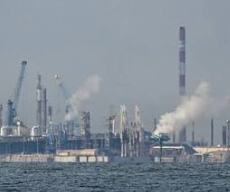
Brent crude futures rose 1.7% to $89.62 a barrel, while West Texas Intermediate advanced 1.6% to $84.69, extending gains after a U.S. military strike on Iranian rocket launchers near the Strait of Hormuz on Sunday reignited fears over disruptions to the critical shipping route, through which roughly a fifth of global oil supply passes.
Fed signals add pressure
Speaking at the Jackson Hole symposium, Warsh gave markets little doubt he was prepared to raise borrowing costs, saying policymakers must be confident that underlying inflation is “moving to our objective, clearly and at sufficient speed,” adding “otherwise, we have work to do.” He described the current inflation rate of 3.7% — nearly double the Fed’s 2% target — as “concerning” and said he would be “hard-pressed” to call existing financial conditions restrictive, a signal interpreted by traders as leaving room for tighter policy.
Market reaction
Asian shares slipped broadly as investors weighed the dual pressures of geopolitical risk and tighter monetary policy. Analysts said the renewed flare-up in the Strait of Hormuz underscored how quickly a geopolitical risk premium can return to oil markets after recent improvement in physical crude flows through the strait.
“Hormuz is once again threatening to put a floor under oil just as Warsh is putting a ceiling on how much inflation patience markets should assume from the Fed,” said Stephen Innes of Quintex Intel.
Gold prices fell roughly 1% following the Warsh speech, while the euro held steady ahead of euro zone inflation data due later this week, seen as a factor in the European Central Bank’s next policy decision on September 10.