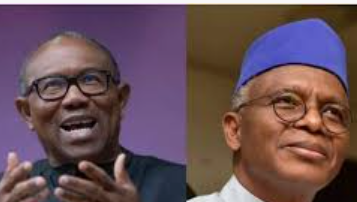
Nigeria’s political landscape has been thrust back into the global spotlight following strong remarks by former presidential candidate Peter Obi, who has described the reported detention of former Kaduna State governor Nasir El-Rufai as an act of “political persecution.”
Obi, a leading opposition figure and advocate for democratic reforms, warned that such actions risk undermining Nigeria’s already fragile democratic institutions. His statement comes amid growing concerns from civil society groups and political observers about the use of state power against perceived political opponents.
El-Rufai, a prominent and often controversial figure in Nigerian politics, has remained influential even after leaving office. While details surrounding his detention remain unclear, the development has ignited widespread debate across the country, with many questioning the motives behind the move.
In his reaction, Obi emphasized the importance of due process and the rule of law, noting that any deviation could erode public trust in governance. “A democracy must be anchored on justice, fairness, and accountability—not selective enforcement,” his statement suggested.
The situation has drawn attention beyond Nigeria’s borders, as international observers continue to monitor the country’s political climate—particularly in the aftermath of recent electoral tensions. Analysts warn that perceived political crackdowns could have broader implications for investor confidence, regional stability, and Nigeria’s democratic reputation.
Supporters of El-Rufai have echoed Obi’s concerns, calling for transparency and adherence to legal standards, while others argue that no individual should be above the law if credible allegations exist. This divide reflects a deeper polarization within Nigeria’s political environment.
As events continue to unfold, the episode serves as a critical test for Nigeria’s commitment to democratic principles. Whether the matter is resolved through transparent legal processes or further political escalation may shape both domestic confidence and international perception in the months ahead.