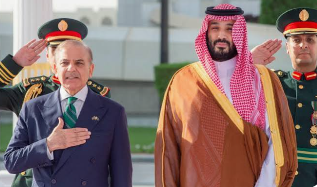
Saudi Arabia, Turkiye and Pakistan are due to sign a joint defense agreement in Jeddah on Friday, according to sources close to the Saudi government and military, in a move that has fueled speculation about a broader security bloc among Muslim-majority nations.
Saudi Crown Prince Mohammed bin Salman is set to meet Turkish President Recep Tayyip Erdogan and Pakistani Prime Minister Shehbaz Sharif in the Red Sea city to formalize the pact, which follows nearly a year of trilateral discussions. Sharif and Pakistan’s army chief, Asim Munir, arrived in the kingdom on Thursday for a visit expected to run through Saturday, while Erdogan was scheduled to arrive Friday.
One source described the timing as accelerated by recent regional turmoil, noting the arrangement had been under discussion for some time but that developments in the region pushed it forward more quickly.
The agreement builds on a bilateral defense pact Saudi Arabia and Pakistan signed last year, under which an attack on either country would be treated as an attack on both — a deal that drew attention given Pakistan’s status as the only nuclear-armed state in the Muslim world. Pakistan’s defense minister, Khawaja Asif, has said the framework could eventually widen further to include countries such as Qatar, and suggested the goal is to reduce reliance on outside powers while strengthening regional stability.
The signing comes against a backdrop of heightened conflict across the Middle East, including the ongoing standoff between the United States and Iran over the Strait of Hormuz, which has disrupted shipping through both that waterway and the Red Sea. It also follows a deadly escalation in Yemen, where Iran-aligned Houthi forces killed dozens of government troops in missile and drone strikes this week — among the worst single days of violence in that country’s civil war in years.
India said it would closely study the implications of the new pact for its own national security and regional stability, reflecting the wider unease the announcement has generated among countries watching the realignment of military ties across South Asia and the Gulf.