Member states at the U.N. General Assembly voted Friday in favor of a resolution urging governments and institutions worldwide to move away from the traditional Mercator map and adopt a projection that better reflects Africa’s actual size relative to other continents.
The measure was put forward by Togo, speaking for the African Group, with support from the African Union, and cleared by a wide margin: 164 nations in favor, only the United States opposed, and six countries — Serbia, Estonia, Georgia, Lithuania, Moldova and Ukraine — choosing to abstain.
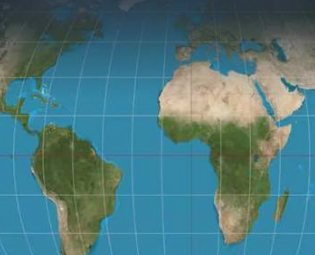
Ahead of the vote, Togolese Foreign Minister Robert Dussey argued that the way maps depict the world carries real influence, shaping what students learn and how the public perceives different regions. The text approved by the Assembly stops short of prohibiting the Mercator map outright; instead, it recommends wider adoption of the Equal Earth projection as a more geographically honest alternative.
The Mercator system dates to 1569, when Flemish mapmaker Gerardus Mercator designed it primarily as a navigational tool for sailors. Its major drawback, critics say, is that it inflates the visual size of land near the poles — Greenland and North America among them — while making Africa and South America look considerably smaller than they really are. On a Mercator map, Africa and Greenland can appear similar in scale; using the Equal Earth model instead, Africa comes out roughly 14 times larger than Greenland.
Africa No Filter, a nonprofit that helped drive the push for change, said its goal is to see the corrected proportions reflected everywhere maps are used — in classrooms, media outlets, corporate materials and the online platforms people rely on daily. French Foreign Minister Jean-Noël Barrot posted after the vote that although altering a map doesn’t alter reality, fixing a distorted picture of it is nonetheless meaningful.
The African Union had already thrown its weight behind the “Correct the Map” effort in the weeks before the U.N. vote. Deputy Commission Chairperson Selma Malika Haddadi said at the time that the long-standing use of the Mercator projection had reinforced a false sense that Africa is a minor player on the world stage, even though it ranks as the planet’s second-largest continent by land area and by population.