Ramaphosa draws the line on illegal immigration — and the employers who fuel it

Table of Content

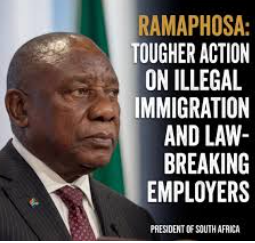
President Cyril Ramaphosa addressed the nation from the Union Buildings on Sunday evening in what

amounted to South Africa’s most comprehensive public reckoning with illegal immigration in years — a nationally televised statement that was as much a political response to mounting street tensions as it was a policy announcement.

The trigger was impossible to ignore. Anti-foreigner protests have been surging across South African communities, fuelled by unemployment, competition for scarce jobs, and a widespread perception that the government has lost control of its borders and its labour market. Ramaphosa acknowledged all of it — the frustration, the pressure on public services, the links between undocumented migration and organised crime — and then spent considerable time trying to channel that anger away from vigilantism and toward the state.

On employers, his language was deliberately sharp. Businesses that knowingly hire undocumented workers, he said, are not merely bending the rules — they are breaking the law, undermining labour standards, distorting fair competition, and closing off opportunities for South African workers. The practice, he added, often involves deliberate exploitation: undocumented migrants cannot assert their rights, so employers pay below minimum wages and impose conditions no legally employed worker would accept. That, he said, will now attract far stronger penalties and far stricter enforcement, up to and including imprisonment for repeat offenders. A fine paid and forgotten, he made clear, will no longer be an acceptable outcome.

The practical machinery behind the rhetoric includes the phased recruitment of 10,000 additional labour inspectors during the current financial year, coordinated blitz inspections targeting businesses suspected of employing undocumented workers, and a new network of dedicated immigration courts designed to accelerate deportation proceedings — a direct acknowledgement that the existing court system has been too slow to serve as any kind of deterrent.

On border security, Ramaphosa disclosed that the Border Management Authority intercepted more than 450,000 attempted illegal crossings over the past year — a figure that speaks both to the scale of the challenge and to the fact that a significant enforcement effort is already under way. Plans include the phased relocation of refugee reception centres to areas closer to border posts, and continued investment in surveillance technology along the country’s perimeter.

But Ramaphosa was also careful to draw a line. He warned explicitly against xenophobia, against vigilante groups appointing themselves as immigration enforcers, and against the politically convenient habit of attributing unemployment, poverty, and inequality entirely to the presence of foreigners. These problems, he said, have domestic roots that immigration enforcement alone cannot resolve.

The balancing act he attempted on Sunday — firmness on enforcement, clarity on the law, resistance to scapegoating — reflects the difficulty of governing a country where the politics of migration have become genuinely explosive, and where any response risks being judged either too soft by those demanding action or too harsh by those watching how South Africa treats its most vulnerable residents.

support@paulkizitoblog.com

support@paulkizitoblog.com http://paulkizitoblog.com

Leave a Reply

Your email address will not be published. Required fields are marked *

Recent News

Trending News

Editor's Picks

Ramaphosa draws the line on illegal immigration — and the employers who fuel it

President Cyril Ramaphosa addressed the nation from the Union Buildings on Sunday evening in what amounted to South Africa’s most comprehensive public reckoning with illegal immigration in years — a nationally televised statement that was as much a political response to mounting street tensions as it was a policy announcement. The trigger was impossible to ignore. Anti-foreigner protests have been surging across South African communities, fuelled by unemployment, competition for scarce jobs, and a widespread perception that the government has lost control of its borders and its labour market. Ramaphosa acknowledged all of it — the frustration, the pressure on public services, the links between undocumented migration and organised crime — and then spent considerable time trying to channel that anger away from vigilantism and toward the state. On employers, his language was deliberately sharp. Businesses that knowingly hire undocumented workers, he said, are not merely bending the rules — they are breaking the law, undermining labour standards, distorting fair competition, and closing off opportunities for South African workers. The practice, he added, often involves deliberate exploitation: undocumented migrants cannot assert their rights, so employers pay below minimum wages and impose conditions no legally employed worker would accept. That, he said, will now attract far stronger penalties and far stricter enforcement, up to and including imprisonment for repeat offenders. A fine paid and forgotten, he made clear, will no longer be an acceptable outcome. The practical machinery behind the rhetoric includes the phased recruitment of 10,000 additional labour inspectors during the current financial year, coordinated blitz inspections targeting businesses suspected of employing undocumented workers, and a new network of dedicated immigration courts designed to accelerate deportation proceedings — a direct acknowledgement that the existing court system has been too slow to serve as any kind of deterrent. On border security, Ramaphosa disclosed that the Border Management Authority intercepted more than 450,000 attempted illegal crossings over the past year — a figure that speaks both to the scale of the challenge and to the fact that a significant enforcement effort is already under way. Plans include the phased relocation of refugee reception centres to areas closer to border posts, and continued investment in surveillance technology along the country’s perimeter. But Ramaphosa was also careful to draw a line. He warned explicitly against xenophobia, against vigilante groups appointing themselves as immigration enforcers, and against the politically convenient habit of attributing unemployment, poverty, and inequality entirely to the presence of foreigners. These problems, he said, have domestic roots that immigration enforcement alone cannot resolve. The balancing act he attempted on Sunday — firmness on enforcement, clarity on the law, resistance to scapegoating — reflects the difficulty of governing a country where the politics of migration have become genuinely explosive, and where any response risks being judged either too soft by those demanding action or too harsh by those watching how South Africa treats its most vulnerable residents. support@paulkizitoblog.com