
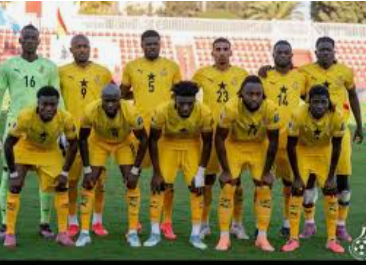
Black Stars Power: Ghana’s World Cup Golden Ticket Sparks National Excitement and Global Ambition

Table of Content

When Mohammed Kudus slotted home the only goal against Comoros on a charged October night at the Accra Sports Stadium, Ghana did not merely book a ticket to North America. The Black Stars exhaled collectively, nationally, and with the particular relief of a football country that had something to prove.

The qualification was earned, not gifted. Under head coach Otto Addo — the same man who steered the side to Qatar 2022 — Ghana topped Group I of the African qualifiers with 25 points from a possible 30, scoring 23 goals and conceding just six across ten matches. The campaign had its wobbles; an early loss to Comoros threatened to unsettle things before a 5-0 demolition of the Central African Republic announced that this was a side with genuine intent. They finished the job with a composed 1-0 win to go through as group winners — joining Algeria, Morocco, Tunisia, and Egypt as the African nations confirmed for the expanded 48-team tournament.

Captain Jordan Ayew spoke for his teammates in the immediate aftermath. The World Cup, he said, was their only chance to redeem themselves. The missed Africa Cup of Nations in Morocco had stung, and the pressure heading into those final qualifiers was immense. That they came through it with the swagger of group winners rather than nervous survivors said something about the character Addo has built.

Now comes the harder question. Ghana have been drawn into Group L alongside England, Croatia, and Panama — a group that demands respect from the first whistle. They open against Panama in Toronto on June 17, before facing England in Boston on June 23 and Croatia in Philadelphia on June 27. It is not an impossible draw, but it requires Ghana to be at their very best from the moment the tournament begins.

The squad that will contest those matches carries real quality, even if it also carries uncertainties. Thomas Partey, now 33 and at Villarreal, remains the engine of the midfield — the player around whom Ghana’s structure is built. His ability to break, distribute, and control tempo will be critical against the physicality England and Croatia will bring. This is almost certainly his final World Cup, a fact that adds weight to every minute he plays. Mohammed Kudus, now firmly established at West Ham, provides the creative unpredictability that defences genuinely fear. Antoine Semenyo adds pace and directness in attack. Jordan Ayew offers experience and the hunger of a man who has never quite had his World Cup moment.

There is, however, a shadow over the technical management. Otto Addo, the architect of qualification, departed after the campaign ended, and Carlos Queiroz — the veteran Portuguese coach who has managed Iran, Egypt, and Colombia among others — has taken charge. Queiroz brings a wealth of international experience, but inheriting a squad mid-cycle, without a qualifying campaign to bed in his ideas, means the World Cup itself becomes his proving ground. Whether the players adapt quickly enough to his methods will be one of the defining variables of Ghana’s tournament.

President John Mahama, who urged the team to draw inspiration from Morocco’s 2022 semi-final run, has set the tone from the top. FIFA president Gianni Infantino was equally effusive, promising that Ghana’s fans would bring colour and passion to what he called the greatest World Cup ever. Both men are right about the fans. Ghanaian supporters, scattered across North America and around the world, will show up in numbers and in voice.

Whether the Black Stars give them reason to roar beyond the group stage is the only question that matters now. Ghana’s history at this tournament is one of tantalising near-misses — the quarter-final in South Africa 2010, the penalty that Asamoah Gyan struck against the bar with the semi-final beckoning, remains one of football’s most agonising what-ifs. The current generation carries no direct responsibility for that night. But they carry the weight of it nonetheless, and with it the possibility — still alive, still real — of finally doing what that 2010 side came so heartbreakingly close to doing.

The world will be watching. So will every Ghanaian who has ever stayed up through the night for a Black Stars game. This is their fifth World Cup. It could be their most consequential.

support@paulkizitoblog.com

support@paulkizitoblog.com http://paulkizitoblog.com

Leave a Reply

Your email address will not be published. Required fields are marked *

Recent News

Trending News

Editor's Picks

Black Stars Power: Ghana’s World Cup Golden Ticket Sparks National Excitement and Global Ambition

When Mohammed Kudus slotted home the only goal against Comoros on a charged October night at the Accra Sports Stadium, Ghana did not merely book a ticket to North America. The Black Stars exhaled collectively, nationally, and with the particular relief of a football country that had something to prove. The qualification was earned, not gifted. Under head coach Otto Addo — the same man who steered the side to Qatar 2022 — Ghana topped Group I of the African qualifiers with 25 points from a possible 30, scoring 23 goals and conceding just six across ten matches. The campaign had its wobbles; an early loss to Comoros threatened to unsettle things before a 5-0 demolition of the Central African Republic announced that this was a side with genuine intent. They finished the job with a composed 1-0 win to go through as group winners — joining Algeria, Morocco, Tunisia, and Egypt as the African nations confirmed for the expanded 48-team tournament. Captain Jordan Ayew spoke for his teammates in the immediate aftermath. The World Cup, he said, was their only chance to redeem themselves. The missed Africa Cup of Nations in Morocco had stung, and the pressure heading into those final qualifiers was immense. That they came through it with the swagger of group winners rather than nervous survivors said something about the character Addo has built. Now comes the harder question. Ghana have been drawn into Group L alongside England, Croatia, and Panama — a group that demands respect from the first whistle. They open against Panama in Toronto on June 17, before facing England in Boston on June 23 and Croatia in Philadelphia on June 27. It is not an impossible draw, but it requires Ghana to be at their very best from the moment the tournament begins. The squad that will contest those matches carries real quality, even if it also carries uncertainties. Thomas Partey, now 33 and at Villarreal, remains the engine of the midfield — the player around whom Ghana’s structure is built. His ability to break, distribute, and control tempo will be critical against the physicality England and Croatia will bring. This is almost certainly his final World Cup, a fact that adds weight to every minute he plays. Mohammed Kudus, now firmly established at West Ham, provides the creative unpredictability that defences genuinely fear. Antoine Semenyo adds pace and directness in attack. Jordan Ayew offers experience and the hunger of a man who has never quite had his World Cup moment. There is, however, a shadow over the technical management. Otto Addo, the architect of qualification, departed after the campaign ended, and Carlos Queiroz — the veteran Portuguese coach who has managed Iran, Egypt, and Colombia among others — has taken charge. Queiroz brings a wealth of international experience, but inheriting a squad mid-cycle, without a qualifying campaign to bed in his ideas, means the World Cup itself becomes his proving ground. Whether the players adapt quickly enough to his methods will be one of the defining variables of Ghana’s tournament. President John Mahama, who urged the team to draw inspiration from Morocco’s 2022 semi-final run, has set the tone from the top. FIFA president Gianni Infantino was equally effusive, promising that Ghana’s fans would bring colour and passion to what he called the greatest World Cup ever. Both men are right about the fans. Ghanaian supporters, scattered across North America and around the world, will show up in numbers and in voice. Whether the Black Stars give them reason to roar beyond the group stage is the only question that matters now. Ghana’s history at this tournament is one of tantalising near-misses — the quarter-final in South Africa 2010, the penalty that Asamoah Gyan struck against the bar with the semi-final beckoning, remains one of football’s most agonising what-ifs. The current generation carries no direct responsibility for that night. But they carry the weight of it nonetheless, and with it the possibility — still alive, still real — of finally doing what that 2010 side came so heartbreakingly close to doing. The world will be watching. So will every Ghanaian who has ever stayed up through the night for a Black Stars game. This is their fifth World Cup. It could be their most consequential. support@paulkizitoblog.com







