A drone, a downed helicopter, and a war that keeps finding new reasons to continue

Table of Content

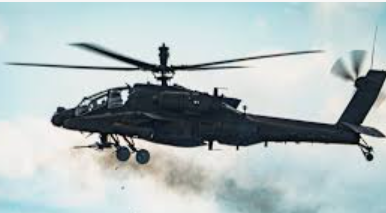
The war between the United States and Iran escalated sharply on Tuesday after an American Army Apache

helicopter went down off the coast of Oman in a collision with an Iranian drone — an incident that President Donald Trump seized upon to order fresh strikes against Iranian targets before investigators had even concluded whether the drone struck the aircraft deliberately.

The helicopter, an AH-64 Apache, was on patrol over the Strait of Hormuz in the early hours of Monday when it collided with an Iranian Shahed drone and crashed into the sea. Its two-person crew survived, spending roughly two hours in the water before being rescued — notably, by an unmanned drone boat that located them in the darkness and brought them to safety before a helicopter could extract them. CENTCOM described it as the first known drone rescue at sea in U.S. military history.

What happened next unfolded with a speed that outpaced the investigation into the incident itself. Trump took to social media declaring that Iran had shot down one of America’s most sophisticated helicopters while it was on patrol and announced that the U.S. had no choice but to respond. By 5 p.m. Eastern time on Tuesday, American forces had begun striking Iranian air defence and radar systems around the Strait of Hormuz — CENTCOM characterising the action as self-defence strikes, proportional in nature, and directed at stopping further aggression.

The problem with that framing, which CENTCOM itself had acknowledged in its earlier communications, is that it remains genuinely unclear whether Iran downed the helicopter intentionally. A U.S. official told reporters that investigators have not yet determined whether the Shahed drone was deliberately directed at the Apache or whether the collision was the result of an accident — two aircraft operating in the same congested, tense, and poorly delineated airspace above one of the world’s most contested waterways. That ambiguity did not slow the American response.

Iran’s foreign minister Abbas Araghchi responded with a warning that was measured in tone but unmistakable in intent — telling foreign forces operating near Iranian territory that they are at constant risk, whether from human error, accident, or crossfire, and that the safest course of action was to leave an environment that would never be hospitable to a hostile presence.

Iranian state media reported explosions on an Iranian island in the strait shortly after the strikes began.

The incident lands at an extraordinarily delicate moment. Just days earlier, Iran and Israel exchanged their most intense fire since the April ceasefire, only pulling back after Trump demanded both sides immediately stop shooting. Diplomacy between Washington and Tehran — already strained by mutual accusations of ceasefire violations — had been inching toward a framework agreement. A U.S. official told reporters that the new strikes were intended as a warning shot and that Washington believed they would not derail negotiations. Whether Tehran reads them the same way is a different question entirely.

What is beyond dispute is that the Strait of Hormuz has now claimed another incident — another moment where accident, intention, and escalation blur into something that carries its own consequences regardless of how it started.

support@paulkizitoblog.com

support@paulkizitoblog.com http://paulkizitoblog.com

Leave a Reply

Your email address will not be published. Required fields are marked *

Recent News

Trending News

Editor's Picks

A drone, a downed helicopter, and a war that keeps finding new reasons to continue

The war between the United States and Iran escalated sharply on Tuesday after an American Army Apache helicopter went down off the coast of Oman in a collision with an Iranian drone — an incident that President Donald Trump seized upon to order fresh strikes against Iranian targets before investigators had even concluded whether the drone struck the aircraft deliberately. The helicopter, an AH-64 Apache, was on patrol over the Strait of Hormuz in the early hours of Monday when it collided with an Iranian Shahed drone and crashed into the sea. Its two-person crew survived, spending roughly two hours in the water before being rescued — notably, by an unmanned drone boat that located them in the darkness and brought them to safety before a helicopter could extract them. CENTCOM described it as the first known drone rescue at sea in U.S. military history. What happened next unfolded with a speed that outpaced the investigation into the incident itself. Trump took to social media declaring that Iran had shot down one of America’s most sophisticated helicopters while it was on patrol and announced that the U.S. had no choice but to respond. By 5 p.m. Eastern time on Tuesday, American forces had begun striking Iranian air defence and radar systems around the Strait of Hormuz — CENTCOM characterising the action as self-defence strikes, proportional in nature, and directed at stopping further aggression. The problem with that framing, which CENTCOM itself had acknowledged in its earlier communications, is that it remains genuinely unclear whether Iran downed the helicopter intentionally. A U.S. official told reporters that investigators have not yet determined whether the Shahed drone was deliberately directed at the Apache or whether the collision was the result of an accident — two aircraft operating in the same congested, tense, and poorly delineated airspace above one of the world’s most contested waterways. That ambiguity did not slow the American response. Iran’s foreign minister Abbas Araghchi responded with a warning that was measured in tone but unmistakable in intent — telling foreign forces operating near Iranian territory that they are at constant risk, whether from human error, accident, or crossfire, and that the safest course of action was to leave an environment that would never be hospitable to a hostile presence. Iranian state media reported explosions on an Iranian island in the strait shortly after the strikes began. The incident lands at an extraordinarily delicate moment. Just days earlier, Iran and Israel exchanged their most intense fire since the April ceasefire, only pulling back after Trump demanded both sides immediately stop shooting. Diplomacy between Washington and Tehran — already strained by mutual accusations of ceasefire violations — had been inching toward a framework agreement. A U.S. official told reporters that the new strikes were intended as a warning shot and that Washington believed they would not derail negotiations. Whether Tehran reads them the same way is a different question entirely. What is beyond dispute is that the Strait of Hormuz has now claimed another incident — another moment where accident, intention, and escalation blur into something that carries its own consequences regardless of how it started. support@paulkizitoblog.com