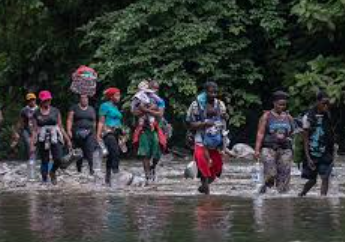
Brazilian federal police intercepted 108 Cuban nationals in a single day on Monday in the northern state of Roraima — the largest single humanitarian rescue operation ever recorded in the state — as authorities dismantled part of the smuggling network ferrying desperate Cubans southward through South America’s interior.
The operation unfolded across three separate incidents along the roads of Roraima, the Brazilian state that sits at the junction of Venezuela and Guyana and has become the primary gateway for Cubans entering the country overland. In one, a convoy of three vehicles attempted to flee police after being flagged down — inside were 39 Cubans, including children, packed into conditions that the Justice Ministry described as precarious. Many had gone without food for at least two days. Five coyotes — human smugglers — were arrested across the day’s operations as part of Operation Safe Route, an initiative launched in December 2024 to disrupt trafficking networks along Brazil’s northern border.
The route the intercepted Cubans were travelling has become the default path for those who can no longer reach the United States. Guyana is the only country in the region that does not require a visa from Cuban nationals, making it the entry point for a journey that moves south through Roraima and then disperses into Brazil’s cities. The Trump administration’s tightening of the northern border effectively closed the route that hundreds of thousands of Cubans had used to reach the United States — irregular Cuban entries into Honduras collapsed from 64,000 in 2024 to just 1,500 in the early months of 2026. Brazil absorbed much of that redirected flow.
The numbers tell their own story. Cuban asylum applications in Brazil surpassed 41,900 in 2025 — an 88 percent increase over 2024 and, for the first time in a decade, more than Venezuelan applications. Between 2010 and 2024, Brazil received a total of just over 52,000 Cuban asylum applications across fourteen years. That number was nearly matched in the nine months between January and September 2025 alone.
What is driving the exodus is not difficult to identify. Cuba’s economy has deteriorated to a degree that has shocked even those who lived through earlier periods of hardship — chronic power outages lasting up to twenty hours a day, acute shortages of food and medicine, inflation that has eviscerated what little purchasing power ordinary Cubans retained, and a political environment in which dissent carries serious consequences. The island has fewer reasons than at any point in recent memory to keep its people home.
Brazil has positioned itself as a comparatively accessible refuge — Cubans can register for asylum digitally on arrival and are permitted to work legally while their applications are processed. The reality behind that openness is grimmer than it sounds. Brazil’s National Refugee Committee approved just two Cuban applications between January and June of last year, rejected nine, and archived nearly eleven thousand cases. The process can take more than five years, and recognition as a refugee is far from guaranteed.
Monday’s interception is a data point in a crisis that has been building for years. The people found in those vehicles on the roads of Roraima were not migrants in any abstract policy sense. They were Cubans who had run out of other options — and had handed what little money they had left to smugglers willing to move them through a continent that was not expecting them.