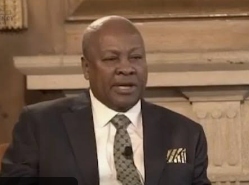
Ghanaian President John Dramani Mahama has defended his government’s decision to reject a proposed health financing agreement from the United States, saying provisions attached to the deal compromised the country’s sovereignty and were dismissed by his Cabinet within minutes of being presented.
Speaking at the Council on Foreign Relations in New York on Friday, Mahama said the compact, intended to replace funding previously delivered through the U.S. Agency for International Development, was reviewed by Ghana’s Ministry of Health before being brought to Cabinet earlier this year. He said the ministry flagged several conditions it considered unacceptable, including a requirement that Ghana share its pathogen profile and medical records with Washington, a stipulation obligating Ghana to provide counterpart funding, and a clause exempting medical products imported under the program from inspection by Ghana’s Food and Drugs Authority. Mahama described the terms as humiliating and said the compact was rejected in Cabinet faster than any proposal he could recall.
He said the Minister of Health was subsequently directed to inform the U.S. Ambassador of Ghana’s decision. According to Mahama, the withdrawal of the proposed funding left a $174 million gap in Ghana’s national budget, with the health sector alone facing an estimated $74 million annual shortfall affecting medical research, HIV and AIDS testing laboratories, and antiretroviral drug distribution under the U.S. President’s Emergency Plan for AIDS Relief. He said the funding gap forced emergency budgetary measures and helped prompt what he called the “Accra Reset,” an initiative aimed at reducing Africa’s dependence on external health financing and expanding local production of medicines and vaccines.
Ghana’s rejection, which occurred in April, reflects a broader divide among African governments over a new U.S. bilateral health financing model introduced amid a restructuring of American foreign assistance. Zambia and Zimbabwe have also declined similar compacts over concerns about health data sovereignty, with Zimbabwe separately withdrawing from talks on a $367 million pact it described as asymmetrical. By contrast, Uganda and the Democratic Republic of Congo have each signed multibillion-dollar agreements under the same framework, with Ugandan officials characterizing their deal as a sovereign-guided cooperation model.