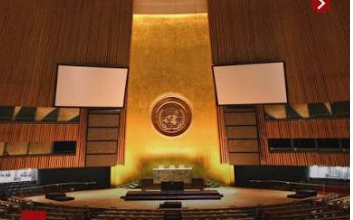
Nearly 130 heads of state and government began arriving at United Nations headquarters in New York on Tuesday for the opening of the general debate of the 81st UN General Assembly, a gathering set against a backdrop of ongoing wars, economic uncertainty and growing concern over the unchecked development of artificial intelligence.
The General Assembly’s 81st session formally opened on September 8, with Khalilur Rahman of Bangladesh sworn in as its president. The general debate, traditionally the centerpiece of the annual session and the primary occasion on which leaders address the body in person, opened Tuesday and is scheduled to run through Saturday before resuming for a final day on Monday, September 28, following a break on Sunday. Sessions are divided into morning and afternoon blocks, with speakers asked to observe a voluntary 15-minute limit, though addresses frequently exceed that guideline.
Outgoing UN Secretary-General António Guterres opened proceedings Tuesday alongside Rahman, presenting his annual report to the Assembly. The address is expected to be his final appearance before the general debate ahead of his departure at the end of the year, when his second and final term concludes. Selection of his successor, who will take office January 1, 2027, is already underway.
This year’s session is being held under the theme “Restoring Trust, Managing Transformation: A United Nations That Delivers for All.”
U.S. President Donald Trump is scheduled to address the Assembly early in Tuesday’s proceedings, speaking after Brazilian President Luiz Inácio Lula da Silva and ahead of Turkish President Recep Tayyip Erdoğan. Trump is also expected to meet separately with Ukrainian President Volodymyr Zelenskiy and take part in a signing ceremony formalizing a security arrangement concerning Greenland. Secretary of State Marco Rubio said no meeting with Iran’s delegation has been scheduled, though he indicated Washington remains open to one should the opportunity arise. Other leaders attending this week include Israeli Prime Minister Benjamin Netanyahu, Iranian President Masoud Pezeshkian and French President Emmanuel Macron.
The gathering takes place as the United States’ military engagement with Iran approaches its seventh month, and as Russia’s invasion of Ukraine continues into its fifth year without a resolution. Diplomats and analysts expect many leaders to use their remarks to address these ongoing conflicts, alongside global economic conditions, the rapid advance of artificial intelligence and mounting financial pressure on the United Nations itself.
Beyond the general debate, High-Level Week includes a series of side sessions addressing major global issues, among them climate action and a just transition, the 40th anniversary of the Declaration on the Right to Development, sea-level rise, pandemic prevention and preparedness, and the 25th anniversary of the Durban Declaration against racism. A separate high-level meeting on the elimination of nuclear weapons is scheduled to follow on September 29.
The session convenes at a time of heightened scrutiny of the institution’s role and finances, with the United Nations having emerged from a period of budgetary strain in the past year amid reduced contributions from member states, including the United States.