Kim Jong-un emerged from the closing session of North Korea’s Ninth Workers’ Party Congress with an unambiguous message to the world: Pyongyang intends to grow its nuclear arsenal, and it will not stop.
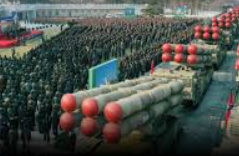
Speaking at a large-scale nighttime military parade in the capital — where he appeared prominently alongside his teenage daughter, Kim Ju Ae — Kim declared it the firm will of the ruling party to increase both the number of nuclear warheads and the range of systems capable of delivering them. State media reported that he assessed North Korea’s international standing as having risen significantly, framing the nuclear expansion not as a defensive necessity but as a natural expression of the country’s growing power.
The pledge is not new in spirit, but its timing and context carry particular weight. It comes as North Korea has deepened its military partnership with Russia, with analysts noting that technology transfers from Moscow have given Pyongyang capabilities it would have taken years longer to develop on its own — fundamentally undermining the sanctions-and-isolation strategy the West has pursued for decades. The Stockholm International Peace Research Institute estimates that North Korea currently possesses around 50 nuclear warheads, with enough fissile material to produce roughly 40 more.
Kim Ju Ae’s presence at the parade has added another dimension to the event. The girl, believed to be around 13, has been appearing at an increasing number of high-profile military and political events since her public debut at a missile launch in late 2022. South Korean intelligence assessments shared with lawmakers earlier this year suggest she is being groomed as heir apparent, possibly with a future role overseeing the country’s nuclear forces — a signal that the Kim dynasty intends its nuclear posture to outlast even its current leader.
Analysts note that the window for meaningful diplomatic engagement with Pyongyang is narrowing. Kim’s current military plan runs through 2026 and prioritises continued development of intercontinental ballistic missiles, submarine-launched weapons, and hypersonic glide vehicles. North Korea has shown little appetite for talks, and the conditions Kim has set for any engagement remain ones no American administration could publicly accept.
What is unfolding in Pyongyang is not a country seeking leverage for future negotiations. It is a country cementing nuclear weapons as a permanent, generational feature of the state.