EU Commits €11.5 Million to Africa CDC as Ebola Outbreak Intensifies in DR Congo and Uganda

Table of Content

The European Union committed €11.5 million to Africa’s disease control body on Monday to bolster the

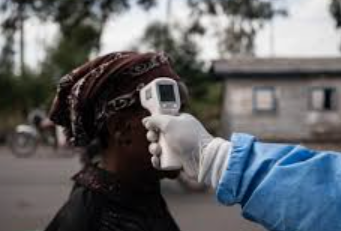
fight against the Ebola outbreak tearing through the Democratic Republic of Congo and Uganda — a pledge that combines fresh cash with urgently needed diagnostic equipment for a response that health authorities have described as one of the most challenging in the continent’s modern history.

The funding, announced at Africa CDC headquarters in Addis Ababa, is split into two distinct streams. Some €6.5 million will go toward strengthening the Africa Pathogen Genomics Initiative — equipping frontline teams and training healthcare workers to better track and understand how the virus is moving and mutating. The remaining €5 million comes not as cash but as an in-kind contribution of testing equipment, including rapid diagnostic devices and laboratory test kits that can be deployed quickly in the field. The distinction matters in an outbreak where speed of detection has already proven to be the critical variable.

The announcement came on the same day that the EU’s Commissioner for Crisis Management, Hadja Lahbib, touched down in Bunia airport in Ituri province — the epicentre of the outbreak — in a show of solidarity that the EU clearly wanted to be seen as more than symbolic. Speaking on the ground, she announced an additional €5 million specifically to establish regional diagnostic centres in the worst-affected provinces, bringing the total European contribution to the response to a substantially larger figure when combined with earlier commitments and humanitarian aid flows.

What makes Monday’s package significant is not merely the money but what it acknowledges. The Bundibugyo strain driving this outbreak is not the Zaire ebolavirus that the world has built its response playbook around. There are no licensed vaccines for it. There are no approved treatments. The rapid diagnostic kits that performed reliably in previous outbreaks were not initially designed to detect it — a failure that delayed the response by weeks. Every tool the EU is now helping to put in the field is being deployed against a virus the world is still learning how to fight.

Africa CDC Director General Dr. Jean Kaseya described the EU partnership as one without conditionality — a pointed remark that reflects the sensitivity around the terms on which external health funding flows into African institutions. He pledged that every euro would be used to make measurable impact on the ground.

The broader picture remains grave. As of late May, over 1,200 suspected and confirmed cases had been recorded, with at least 349 deaths — figures that authorities acknowledge almost certainly undercount the true scale of the outbreak given the difficulty of reaching communities in conflict-affected Ituri province. Uganda has confirmed cases in Kampala, and the WHO and Africa CDC have jointly launched a response plan valued at nearly half a billion dollars to contain what has already been declared a Public Health Emergency of International Concern.

Europe’s money is welcome. Whether it arrives in time, and whether the infrastructure exists on the ground to use it effectively, will determine whether this outbreak is contained or whether the numbers get considerably worse.

support@paulkizitoblog.com

support@paulkizitoblog.com http://paulkizitoblog.com

Leave a Reply

Your email address will not be published. Required fields are marked *

Recent News

Trending News

Editor's Picks

EU Commits €11.5 Million to Africa CDC as Ebola Outbreak Intensifies in DR Congo and Uganda

The European Union committed €11.5 million to Africa’s disease control body on Monday to bolster the fight against the Ebola outbreak tearing through the Democratic Republic of Congo and Uganda — a pledge that combines fresh cash with urgently needed diagnostic equipment for a response that health authorities have described as one of the most challenging in the continent’s modern history. The funding, announced at Africa CDC headquarters in Addis Ababa, is split into two distinct streams. Some €6.5 million will go toward strengthening the Africa Pathogen Genomics Initiative — equipping frontline teams and training healthcare workers to better track and understand how the virus is moving and mutating. The remaining €5 million comes not as cash but as an in-kind contribution of testing equipment, including rapid diagnostic devices and laboratory test kits that can be deployed quickly in the field. The distinction matters in an outbreak where speed of detection has already proven to be the critical variable. The announcement came on the same day that the EU’s Commissioner for Crisis Management, Hadja Lahbib, touched down in Bunia airport in Ituri province — the epicentre of the outbreak — in a show of solidarity that the EU clearly wanted to be seen as more than symbolic. Speaking on the ground, she announced an additional €5 million specifically to establish regional diagnostic centres in the worst-affected provinces, bringing the total European contribution to the response to a substantially larger figure when combined with earlier commitments and humanitarian aid flows. What makes Monday’s package significant is not merely the money but what it acknowledges. The Bundibugyo strain driving this outbreak is not the Zaire ebolavirus that the world has built its response playbook around. There are no licensed vaccines for it. There are no approved treatments. The rapid diagnostic kits that performed reliably in previous outbreaks were not initially designed to detect it — a failure that delayed the response by weeks. Every tool the EU is now helping to put in the field is being deployed against a virus the world is still learning how to fight. Africa CDC Director General Dr. Jean Kaseya described the EU partnership as one without conditionality — a pointed remark that reflects the sensitivity around the terms on which external health funding flows into African institutions. He pledged that every euro would be used to make measurable impact on the ground. The broader picture remains grave. As of late May, over 1,200 suspected and confirmed cases had been recorded, with at least 349 deaths — figures that authorities acknowledge almost certainly undercount the true scale of the outbreak given the difficulty of reaching communities in conflict-affected Ituri province. Uganda has confirmed cases in Kampala, and the WHO and Africa CDC have jointly launched a response plan valued at nearly half a billion dollars to contain what has already been declared a Public Health Emergency of International Concern. Europe’s money is welcome. Whether it arrives in time, and whether the infrastructure exists on the ground to use it effectively, will determine whether this outbreak is contained or whether the numbers get considerably worse. support@paulkizitoblog.com