
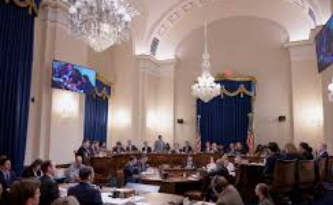
The U.S. House of Representatives passed a $70 billion immigration enforcement bill on Tuesday by the narrowest of margins — 214 to 212 — sending to President Trump’s desk a funding package that locks in money for his deportation agenda through the end of his term, with virtually no conditions attached and not a single Democratic vote.
The legislation directs roughly $38 billion to Immigration and Customs Enforcement, $26 billion to Customs and Border Protection, and $5 billion held in reserve for unforeseen enforcement costs. Combined with nearly $140 billion already approved by Republicans last year, it makes ICE by a considerable margin the most generously funded law enforcement agency in the federal government — and ensures that neither a future Democratic Congress nor a government shutdown can easily cut off the money before January 2029.
That last point was the explicit goal. Speaker Mike Johnson framed the three-year funding window as a deliberate structural choice: by funding through the remainder of the Trump presidency rather than year by year, Republicans have effectively removed immigration enforcement from the annual budget battlefield where opponents might seek leverage. What we’ve done, Johnson said, is taken away their ability to cut or hold hostage that funding for the rest of this administration.
The bill arrives after months of institutional chaos that left immigration enforcement in legal and financial limbo. The flashpoint was Minneapolis, where federal agents fatally shot two American citizens — Alex Pretti and Renee Good — during enforcement operations earlier this year. Democrats responded by refusing to fund ICE and the Border Patrol without significant reforms: agents unmasked during operations, ID badges displayed, judicial warrants required before entering private property. The standoff triggered a 76-day partial shutdown of the Department of Homeland Security — a record — before Republicans bypassed Democratic opposition entirely using reconciliation, a procedural mechanism that requires only a simple majority in the Senate and cannot be filibustered.
The final bill contains none of the reforms Democrats demanded. The deaths in Minneapolis went unaddressed in the text. Democratic leader Hakeem Jeffries called it a blank check for aggression without oversight. Republicans called it long overdue and essential to national security.
For Trump, it is a significant midterm-year victory on the issue that has defined his political identity across two presidencies. The machine he has built — mass arrests, accelerated deportations, a sprawling detention infrastructure — now has guaranteed fuel through 2029, regardless of what happens in November’s congressional elections.
For the millions of undocumented people living in the United States, and for the immigrant communities watching from countries like Cuba, Venezuela, and Somalia whose nationals are caught in the machinery this money will power, Tuesday’s vote was something else entirely.