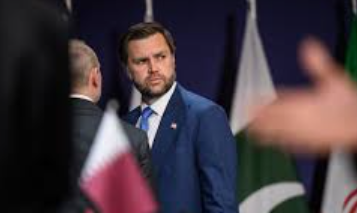
U.S. Vice President JD Vance said Monday that the first round of high-level talks between the United States and Iran, held under a 14-point memorandum of understanding at the Bürgenstock resort in Switzerland, had produced a solid basis for a comprehensive agreement, though much work remains.
The two sides, along with mediators Qatar and Pakistan, agreed on a roadmap aimed at reaching a final deal within 60 days. They also established a High-Level Committee to provide political oversight of the process, with Vance and Iranian Parliament Speaker Mohammad Bagher Ghalibaf serving as chief negotiators overseeing working groups on the nuclear program, sanctions relief and dispute resolution. Technical-level talks are expected to continue through the week in Bürgenstock.
Vance described the session as a milestone and a first step toward winding down Iran’s nuclear program, using a construction metaphor to stress that a final agreement was still far off — saying the parties had set the foundation but not yet built the house. He said the talks also produced a communication channel meant to prevent incidents in the Strait of Hormuz and a deconfliction mechanism involving Lebanon, where fighting between Israel and Hezbollah has continued to complicate the broader diplomatic track.
On economic matters, Vance said frozen Iranian assets, if released, would be unfrozen under a controlled process overseen jointly by the U.S. and Qatar, with the funds intended for purchases of American agricultural goods and aid for the Iranian population rather than for groups Washington considers proxies of Tehran.
The negotiations nearly collapsed before they began. Talks were briefly disrupted over the weekend after President Trump warned Iran against allowing its regional allies, particularly Hezbollah, to continue military activity, prompting Iran to pull out of a planned four-way meeting with the U.S., Qatar and Pakistan, though officials from both countries went ahead with bilateral discussions. Ghalibaf dismissed Trump’s warning, saying Iran would not be intimidated and that its armed forces stood ready to respond if necessary. Despite the friction, both sides ultimately reached the roadmap agreement, and Iran’s central bank governor said use of the unfrozen funds could begin within days.