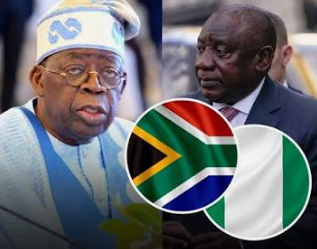
Nigeria’s Federal Government has opened talks with South African authorities over compensation for citizens who abandoned businesses and properties while fleeing renewed anti-immigrant tensions in the country, as fresh batches of evacuees continued to touch down in Lagos.
Acting Nigerian High Commissioner to South Africa, Alexander Ajayi, disclosed the plan during a television interview on Tuesday, saying officials had already begun building a paper trail to underpin compensation claims. Returnees are being asked to submit detailed inventories of everything left behind — businesses, vehicles, shops, and both movable and immovable assets — before they board evacuation flights.
“We are going to work with the South African government to get to the exact locations of all these businesses, shops and properties and present them to the South African government for possible compensation, because we will not allow the labour people have suffered to build over the years to just go down the drain,” Ajayi said, indicating he had already raised the issue three days earlier in a meeting with South Africa’s Deputy Minister of Finance.
He was clear that the repatriation programme would not mark the end of Nigeria’s engagement on the matter. Once documentation is complete and verified by both governments, Abuja intends to formally press for redress, though no timeline or financial figures were given.
The envoy also pushed back on the characterisation of evacuated Nigerians as undocumented migrants, arguing that the majority had entered South Africa through legal channels and were simply caught in a years-long backlog of unprocessed immigration renewal applications at South Africa’s Home Affairs Department — a situation affecting many foreign nationals, not Nigerians alone.
Another batch of 271 evacuees arrived at the Murtala Muhammed International Airport in Lagos aboard an Air Peace flight on Tuesday morning, bringing the total number of Nigerians repatriated under the government’s emergency programme to more than 600. An initial group of 258 had been flown home on June 11, followed by 66 more on June 24. Officials from the Ministry of Foreign Affairs, NEMA and the Nigeria Immigration Service received the passengers on the tarmac.
The Ministry of Foreign Affairs said evacuation flights would continue beyond South Africa’s June 30 deadline — set by vigilante groups, not the government — for undocumented migrants to leave the country. President Bola Tinubu has approved five Air Peace flights in total for the exercise, though some Nigerians still in South Africa appealed for more, with reports of hundreds still camped outside Nigeria’s High Commission in Pretoria and willing to leave.
Anti-immigrant demonstrations in South Africa proceeded largely without incident on Tuesday, with Pretoria deploying around 13,000 security personnel, backed by helicopters, drones and surveillance cameras, to keep the protests from turning violent. South African President Cyril Ramaphosa had urged demonstrators to remain peaceful and warned of consequences for anyone crossing into criminal conduct.