
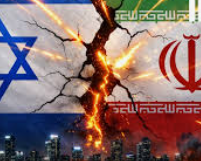
Iran fired ballistic missiles at Israel on Sunday evening, breaking a ceasefire that had been in place since
April and throwing the region back into a state of acute alarm on the hundredth day since the war between Iran and the U.S.-Israeli alliance began.
Air raid sirens sounded across northern Israel as the missiles were launched. Israeli air defence systems engaged the incoming projectiles, and by late evening Israeli officials said all had been intercepted with no casualties or structural damage reported. Iranian state media subsequently announced a third wave of launches, though Israeli authorities maintained that their defences held.
Iran’s Revolutionary Guard Corps said the attack was deliberate and targeted — directed specifically at Ramat David Airbase in northern Israel, which Tehran holds responsible for the Israeli strikes on Beirut that took place earlier in the day. Israel had hit the southern Beirut suburb of Dahieh, a move Iran characterised as a crossing of red lines. The missile strike, Tehran said, was a warning. It added that should Israel respond or continue its campaign in Lebanon, the consequences would be broader and more severe.
Israel’s military said Iran had made a grave mistake. Senior officials began deliberating a response almost immediately, though the scale and timing remained undecided by midnight. The mood in the Israeli security cabinet, according to those familiar with its deliberations, was one of controlled anger rather than panic — a recognition that whatever comes next carries enormous consequences.
President Trump, watching from Washington, appealed to both sides simultaneously. He urged Iran to stop and return to the negotiating table, and separately pressed Israel not to retaliate. The dual appeal captured the impossible position Washington now occupies — trying to hold together a diplomatic process while two of its most consequential regional relationships pull in opposite directions.
The ceasefire that Iran punctured on Sunday had never been particularly stable. Both sides had accused the other of violations almost from the day it was announced on April 8. The cumulative pressure of Israeli strikes in Lebanon, Iranian drone attacks on Gulf shipping lanes, the hit on Kuwait’s airport earlier this week, and the breakdown of back-channel communications between Tehran and Washington had all been building toward a moment like this.
What remains unknown tonight is whether Iran fired enough missiles to make its point without triggering the full Israeli military response it claims to be preparing for — or whether it has simply fired the starting gun on a new and more dangerous phase of a war the world had hoped was winding down.










