Australia has confirmed its first case of highly pathogenic H5N1 avian influenza on the mainland, ending
its status as the only continent on Earth to have remained free of the virus. The detection came from a migratory bird found dead in southwestern Western Australia; Agriculture Minister Julie Collins announced the initial finding, and confirmatory testing has since verified the result. Samples from a second suspected case found nearby are still being tested, and state and territory governments are now coordinating on next steps. Collins struck a measured tone in addressing the development, saying that the spread of the virus globally had made this moment sobering but not unexpected.
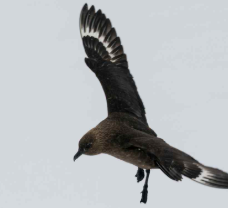
The strain involved, clade 2.3.4.4b H5N1, is the same lineage that has devastated bird and mammal populations across Asia, Europe, and the Americas since 2020. In wild birds it spreads through respiratory secretions and droppings that contaminate water, soil, feathers, and shared habitats, and it can cause rapid, severe disease and sudden death across entire colonies. Australia is not entirely new to this virus: a related outbreak struck Heard Island, a remote Australian sub-Antarctic territory, killing thousands of elephant seal pups in a previous wave, and the country logged a single human case in 2024 in a child who had been infected in India and made a full recovery. But this is the first time the virus has reached Australia’s mainland wild bird population, and conservationists are anxious because the country’s seabird and native bird colonies, unlike those in regions where the virus has already circulated for years, have no prior exposure to build any resistance against it.
What This Has to Do With Africa
The reflex response to a story like this is to treat it as a faraway problem — a continent thousands of kilometers away losing a record it held for decades. That reaction would be a mistake, because Africa is not a bystander in the global H5N1 picture. It is already living with the virus, and the pattern Australia just experienced — wild migratory birds introducing a high-pathogenicity strain into a previously unexposed or under-monitored bird population, which then spills into poultry — is close to the exact pattern that has played out repeatedly across the African continent for the past five years.
West Africa has been dealing with a sustained resurgence. The World Organisation for Animal Health’s data shows the region experienced a major wave of outbreaks in 2021 that hit nine countries, including Senegal, Côte d’Ivoire, Togo, Niger, Mali, Ghana, Nigeria, Benin, and Mauritania. The virus did not disappear after that; between 2022 and 2023 it continued circulating intermittently across Burkina Faso, Togo, Niger, Senegal, Guinea, and the Gambia, and the situation intensified again between 2024 and 2025 with fresh outbreaks in Nigeria, Niger, Ghana, Togo, and Liberia. Reporting into 2026 shows the pattern has not broken: H5N1 has resurfaced again in Nigeria, Senegal, and Côte d’Ivoire, prompting a regional response effort with a budget of roughly $350,000 aimed at strengthening surveillance, diagnostic capacity, and risk communication across the poultry sector. Experts following the region have warned that without sustained progress on cross-border coordination and biosecurity, avian influenza is likely to remain a structural, recurring threat to one of West Africa’s fastest-growing livestock industries, rather than a one-off crisis.
Southern Africa tells a similar story. South Africa recorded its first major clade 2.3.4.4b H5N1 outbreaks in poultry in April 2021, a shock that hit the country while it was still managing the COVID-19 pandemic, triggering import bans, large-scale culling, and emergency biosecurity measures on farms. The virus did not stay confined to South Africa or to poultry. Genomic analysis later traced the spread into neighboring Lesotho and Botswana, with researchers determining that at least 83% of South Africa’s commercial poultry cases in 2021 and 2022 originated as point introductions from wild birds rather than farm-to-farm spread. The toll on wildlife was severe: a coastal seabird-restricted sub-lineage of the virus emerged in South Africa’s Western Cape province and spread into Namibia, killing around 24,000 endangered Cape cormorants and more than 300 endangered African penguins. By 2023, the virus was still circulating in South African seabirds and ostrich populations, with active surveillance detecting H5 and several other influenza subtypes in wild bird populations across the country.
Why the Australian Case Is a Warning, Not Just News
Three things make the Australian detection relevant well beyond its own borders, and especially relevant to Africa. First, it confirms that wild migratory birds remain the primary engine spreading this virus globally, and that no region’s geography offers permanent protection — Australia held out longer than anywhere else specifically because of its relative isolation from major migratory routes, and even that distance proved temporary. Africa, by contrast, sits directly along multiple major bird migration flyways connecting it to Europe and Asia, which is precisely why the continent has already experienced repeated introductions rather than a single isolated event.
Second, the global health agencies tracking this virus have been explicit that the underlying threat is not standing still. The World Health Organization notes that the goose/Guangdong lineage behind H5N1 has been circulating since 1996, and that the clade 2.3.4.4b variant responsible for the current global wave has caused an unprecedented number of deaths in wild birds and poultry across Africa, Asia, and Europe since 2020, later reaching the Americas as well. The U.S. Centers for Disease Control and Prevention has separately noted that because influenza viruses evolve rapidly and the virus is now circulating so widely in birds, mammals, and in some cases dairy cattle, additional sporadic human infections are expected, and that comprehensive, continuous surveillance is essential to catching dangerous mutations early.
Third, the economic stakes for Africa are not hypothetical. Poultry is one of the continent’s fastest-growing livestock sectors and a critical source of protein, income, and employment, particularly for smallholder farmers across West Africa. Outbreaks bring mass culling, trade and export restrictions, and direct production losses, on top of the public health risk of spillover into farm workers who have close, sustained contact with infected birds.
What Preparedness Actually Looks Like
The lesson regional health and agriculture authorities have drawn from the past five years is that H5N1 in Africa is not a once-off emergency to be managed and forgotten, but a recurring structural risk that requires standing infrastructure. That means sustained investment in surveillance of both wild bird populations and commercial poultry, rather than testing only after mass deaths are already being reported. It means faster diagnostic turnaround so that outbreaks can be contained at a single farm rather than spreading regionally before they are even confirmed. It means stronger cross-border coordination, given that the South African experience showed the virus moving into Lesotho and Botswana largely independent of any single national response. It means consistent biosecurity practice on poultry farms — controlling movement of people and vehicles, protective clothing, and separating commercial flocks from wild bird contact — the same measures South African producers scrambled to implement only after outbreaks had already begun. And it means clear, ongoing risk communication to farm workers and the public, since human infections to date have been overwhelmingly linked to direct contact with infected birds or contaminated environments rather than person-to-person spread.
Australia’s loss of its bird-flu-free status is being treated, correctly, as a global milestone. For Africa, it should land less as distant news and more as confirmation of a pattern the continent already knows well: this virus does not respect borders, and the regions that fare best are the ones that treat surveillance and biosecurity as permanent infrastructure rather than emergency response.