🌊 Key Facts About the Discovery
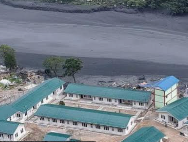
- Location: Off the coast of Laizhou City, Yantai, Shandong Province, near the Jiaodong Peninsula.
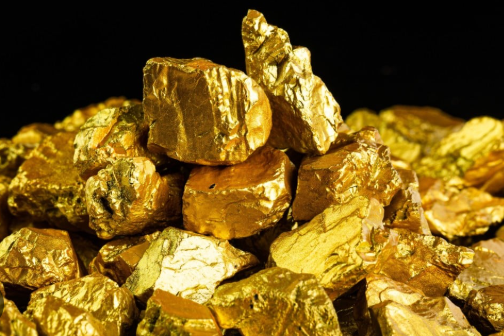
- Scale: The discovery pushes Laizhou’s total proven gold reserves beyond 3,900 tonnes (≈137.57 million ounces), which is about 26% of China’s national reserves.
- Historical Significance: This is the largest undersea gold deposit ever found in Asia since modern records began after World War II.
- China’s Position: Already the world’s largest gold producer, China mined about 377 tonnes in 2024, and this discovery further cements its dominance.
- Exploration Investment: China has invested nearly 450 billion yuan in mineral exploration since 2021, reflecting its aggressive push to secure resources.
📊 Why This Matters
| Aspect | Impact |
|---|---|
| Economic | Strengthens China’s gold reserves, supporting currency stability and financial security. |
| Geopolitical | Enhances China’s leverage in global resource competition, especially in Asia. |
| Technological | Showcases advanced undersea exploration capabilities, a frontier in mining. |
| Environmental | Raises concerns about ecological risks of deep-sea mining. |
⚠️ Risks & Challenges
- Environmental Concerns: Undersea mining can disrupt marine ecosystems, raising sustainability debates.
- Extraction Difficulty: Offshore deposits are harder and more expensive to mine than land-based reserves.
- Transparency Issues: Chinese media has not disclosed the exact size of the deposit, leaving questions about its true scale.
🌍 Context
This discovery comes amid a global race for resources. With gold being both a financial hedge and a strategic asset, China’s find could reshape Asia’s resource map and reinforce its economic resilience. It also highlights the shift toward offshore exploration, as land-based reserves become harder to find.
📚 References
- Republic World. (2025, December 21). Asia’s largest undersea gold deposit discovered in China. Retrieved from https://www.republicworld.com/world-news/asia-s-largest-undersea-gold-deposit-discovered-in-china
- WION. (2025, December 20). China finds Asia’s largest undersea gold deposit in East China Sea. Retrieved from https://www.wionews.com/videos/china-finds-asia-s-largest-undersea-gold-deposit-in-east-china-sea-wion-1766223237259
- News24. (2025, December 20). This country hits jackpot, set to become super rich, discovers huge deposits of gold undersea. Retrieved from https://news24online.com/world/this-country-hits-jackpot-set-to-become-super-rich-discovers-huge-deposits-of-gold-undersea-not-us-russia-uk-saudi-arabia-uae-japan-name-is/691727/
- WION. (2025, December 20). China uncovers Asia’s largest offshore gold deposit in East China Sea. Retrieved from https://www.wionews.com/world/china-asia-largest-undersea-gold-deposit-jiaodong-1766215700701
- China Strategy. (2025, December 19). China discovers Asia’s largest undersea gold deposit off Jiaodong Peninsula. Retrieved from https://www.chinastrategy.org/2025/12/19/china-discovers-asias-largest-undersea-gold-deposit-off-jiaodong-peninsula/
- Bitcoin News. (2025, December 19). China discovers ‘largest’ undersea gold deposit in Asia as state mining ambitions expand. Retrieved from https://news.bitcoin.com/china-discovers-largest-undersea-gold-deposit-in-asia-as-state-mining-ambitions-expand/