Israel and Lebanon signed a framework agreement on Friday in a US-brokered deal described as a first step toward ending months of fighting between Israel and Hezbollah, the Iran-backed militant group.
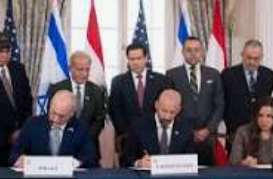
Secretary of State Marco Rubio announced the agreement alongside Israel’s ambassador to Washington, Yechiel Leiter, and Lebanon’s ambassador, Nada Hamadeh, who signed the document at the State Department after four days of talks. “Today is a good day,” Rubio said, calling it the start of “a framework for lasting peace and security.”
Officials gave few specifics, but Israeli Prime Minister Benjamin Netanyahu said the deal would allow Israel to withdraw from two areas in southern Lebanon, handing them to the Lebanese army under a pilot program. He said Israeli forces would otherwise remain in a security buffer zone “as long as Hezbollah has not disarmed.”
Hamadeh called the framework “a first step on the road to restoring Lebanese sovereignty and territorial integrity,” while Leiter said the agreement was “performance-based” and declared that “Iran is out, Hezbollah is out.”
The deal does not involve Hezbollah directly. A senior Hezbollah lawmaker, Hassan Fadlallah, rejected the talks and warned that enforcing the agreement could lead to civil war in Lebanon, while Hezbollah leader Naim Qassem demanded Israel withdraw unconditionally.
Washington pledged $100 million in humanitarian aid and additional funding to train and reimburse the Lebanese armed forces. Rubio acknowledged the road ahead remains difficult, calling Friday’s signing “the beginning of the beginning.”
The latest round of fighting began in late February, after Hezbollah fired rockets into Israel following the start of the Israel-US war on Iran. Israel responded by invading parts of Lebanon and expanding its military presence there. The talks were held separately from the interim US-Iran agreement reached last week, which set a 60-day window for negotiations over Tehran’s nuclear program.