
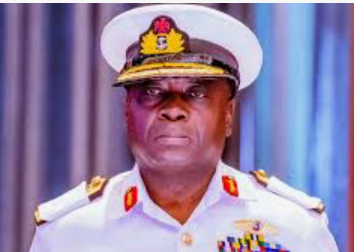
Nigeria’s Chief of Naval Staff, Vice Admiral Emmanuel Ikechukwu Ogalla, has thrown his weight behind the creation of a dedicated maritime court, making the case that the country’s existing judicial architecture is simply not built to handle the scale, complexity, and urgency of crimes being committed on its waters.
The proposal, which Ogalla has been pressing with increasing public forcefulness, goes to the heart of a frustration that has long simmered within Nigeria’s security establishment — that hard-won arrests at sea are too often followed by prosecutions that drag on for years in general courts ill-equipped to interpret maritime law, assess technical evidence, or move at the pace that effective deterrence demands. Suspects walk free on procedural grounds. Cases collapse. The message sent to criminal networks operating in the Gulf of Guinea is that the legal system is not something they need to fear.
That message has consequences. Nigeria’s territorial waters and the broader Gulf of Guinea remain among the most criminally active maritime zones in the world. Piracy, crude oil theft conducted through sophisticated bunkering operations, illegal fishing by foreign vessels bleeding out the livelihoods of coastal communities, and the smuggling of goods and weapons — these are not peripheral problems. They represent a sustained haemorrhage of national revenue and a persistent drag on investor confidence in one of West Africa’s most strategically significant maritime corridors.
Ogalla’s argument is that a specialised court would bring judges, prosecutors, and legal frameworks into alignment with the technical realities of maritime crime — from the interpretation of the United Nations Convention on the Law of the Sea to the handling of evidence gathered at sea, the jurisdiction questions that arise when offences cross national boundaries, and the coordination required between the Navy, the Nigerian Maritime Administration and Safety Agency, the Economic and Financial Crimes Commission, and other agencies that currently operate in silos.
The timing of the push is deliberate. The Nigerian Navy has invested heavily in recent years in expanding its surveillance capabilities and deepening cooperation with Gulf of Guinea neighbours under regional security frameworks. Ogalla’s case, in essence, is that the operational side of maritime security has advanced faster than the judicial side, and that the gap between the two is being exploited.
Whether the proposal gains traction will depend on the political will to carve out a new judicial institution in a system already stretched thin. But with Nigeria’s offshore energy infrastructure, its ports, and its fishing economy all acutely exposed to maritime crime, the argument for a dedicated court is one that is becoming harder to dismiss.