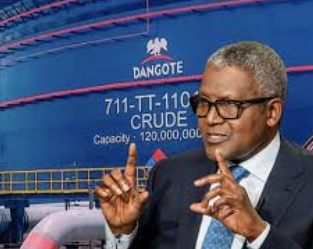
Dangote Petroleum Refinery has increased its ex-depot price of Premium Motor Spirit (PMS), commonly known as petrol, by ₦100 — from ₦774 to ₦874 per litre — a move that could spark another wave of fuel price hikes across Nigeria.
The adjustment at the 650,000-barrel-per-day facility, located in the Lekki Free Zone near Lagos, is significant because the refinery was widely expected to stabilize domestic fuel supply and reduce Nigeria’s long-standing dependence on imported refined petroleum products.
Why It Matters
Nigeria, Africa’s largest oil producer, has historically relied on fuel imports due to limited refining capacity. The Dangote refinery — one of the largest single-train refineries in the world — was launched with the promise of reshaping the country’s energy landscape.
An increase at the gantry (ex-depot) level typically translates into higher retail pump prices as marketers pass additional costs to consumers. For many Nigerians, petrol prices directly influence transportation fares, food prices, electricity costs (through generators), and overall living expenses.
With inflation already weighing heavily on households and businesses, the new pricing could intensify economic strain in a country of over 200 million people.
What’s Driving the Increase?
Although the refinery has not issued a detailed public explanation for the adjustment, analysts cite several possible factors:
- Volatility in global crude oil prices
- Exchange rate fluctuations affecting operational costs
- Market-driven pricing reforms following the removal of fuel subsidies
Since the federal government ended long-standing petrol subsidies in 2023, fuel prices in Nigeria have been largely market-determined — leading to periodic adjustments aligned with global market realities.
Broader Implications
The development underscores the complexities of transitioning from a subsidized fuel regime to a liberalized energy market. While domestic refining was expected to cushion external shocks, pricing remains sensitive to global crude benchmarks and currency dynamics.
For investors and regional markets, the price shift highlights the continued volatility within Nigeria’s downstream petroleum sector — even as the Dangote refinery ramps up operations and expands distribution capacity.
Whether the increase proves temporary or marks the beginning of a new pricing cycle will depend largely on global oil trends, currency stability, and domestic supply dynamics in the months ahead.