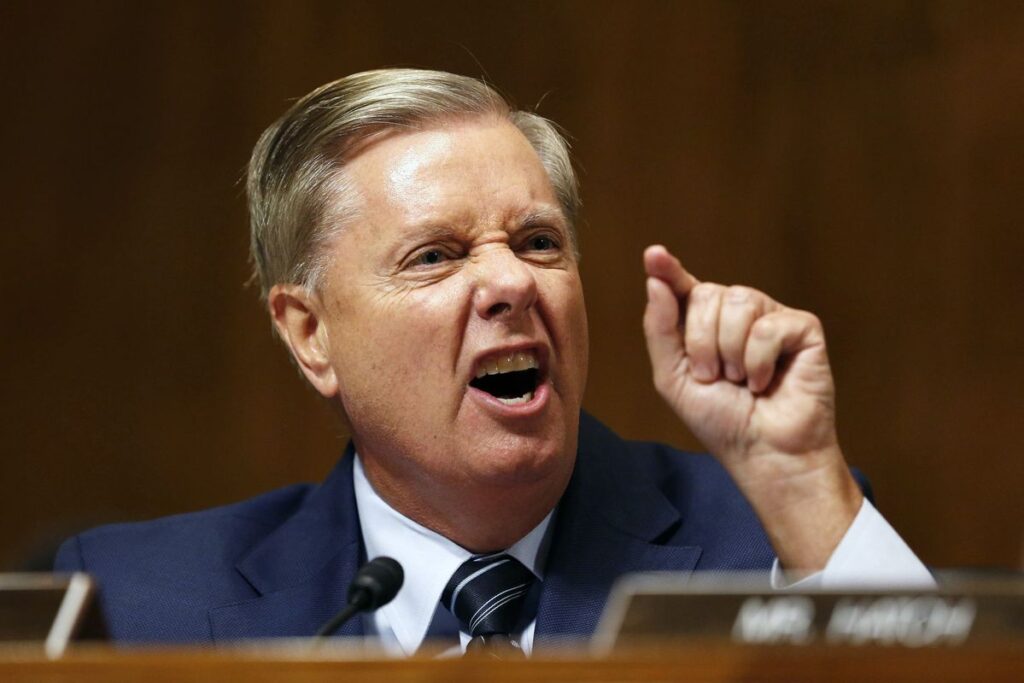
U.S. Senator Lindsey Graham has warned that Cuba could face intensified pressure from Washington following recent U.S. military action in Venezuela, declaring that Havana’s “days are numbered” if it continues to support governments or movements hostile to U.S. interests.
Graham, a senior Republican lawmaker and longtime advocate of a hardline approach toward Cuba, made the remarks amid heightened regional tension after the removal of Venezuelan leader Nicolás Maduro. His comments reflect growing sentiment among some U.S. lawmakers that Venezuela’s upheaval could mark a broader shift in U.S. policy toward leftist governments in the Caribbean and Latin America.
“Those who prop up instability in this hemisphere should take notice,” Graham said, arguing that recent events demonstrate Washington’s willingness to act decisively.
Linking Cuba to Regional Instability
Graham has repeatedly accused Cuba of playing a behind-the-scenes role in sustaining the former Venezuelan government, particularly through intelligence cooperation and security assistance. While Cuban officials have denied such allegations, U.S. critics of Havana have long portrayed the island as a central node in a network of regional alliances opposed to U.S. influence.
In his latest remarks, Graham suggested that U.S. military action in Venezuela sends a broader message to governments he describes as authoritarian or destabilizing.
“The status quo is no longer guaranteed,” he said, without outlining specific measures against Cuba.
No Immediate Policy Announcement
The White House has not announced any new military or economic action against Cuba, and there has been no indication of imminent intervention. U.S. officials have so far framed Venezuela as a distinct case, driven by security, legal, and humanitarian considerations.
However, Graham’s comments are likely to intensify debate in Washington over whether the U.S. should adopt a more aggressive posture toward Havana, particularly if Cuba is seen as resisting regional political change.
Analysts caution that while congressional rhetoric can influence policy discussions, it does not automatically translate into executive action.
Reaction From Havana and the Region
Cuban authorities have not formally responded to Graham’s remarks, but Havana has historically rejected U.S. accusations as hostile propaganda and interference in its internal affairs.
Across Latin America, reactions have been mixed. Some governments have expressed concern that increasingly confrontational language could escalate tensions and undermine regional stability, while others have quietly welcomed stronger pressure on governments they view as entrenched and unaccountable.
Diplomats say the remarks underscore uncertainty about how far Washington might extend its recent assertiveness beyond Venezuela.
Political Signaling at a Sensitive Moment
Observers note that Graham’s warning may be aimed as much at domestic and regional audiences as at Cuba itself. With Venezuela’s political order disrupted, lawmakers favoring a tougher U.S. stance see an opportunity to reshape long-standing dynamics in the hemisphere.
Still, experts stress that Cuba’s situation differs significantly from Venezuela’s, with different legal, political, and strategic considerations.
“Rhetoric is escalating faster than policy,” said one regional analyst. “Whether that gap closes remains an open question.”
An Unsettled Outlook
While Graham’s statement adds to mounting pressure and speculation, the future of U.S.–Cuba relations remains uncertain. Any significant shift would likely depend on decisions taken by the White House, not Congress alone.
For now, the comments serve as a warning signal rather than a policy declaration, highlighting how events in Venezuela are reverberating far beyond its borders—and reshaping political calculations across the Americas.