American forces struck Iranian coastal surveillance radar installations on Saturday after intercepting a
fresh wave of drones launched by Tehran toward the Strait of Hormuz, the U.S. military’s Central Command confirmed — the latest exchange in a conflict that has turned one of the world’s most critical waterways into a theatre of sustained and grinding confrontation.
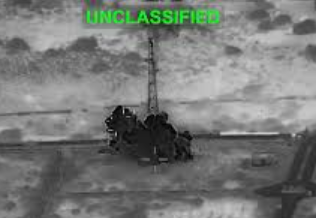
CENTCOM said its forces shot down four Iranian one-way attack drones that had been directed toward shipping traffic in the strait before going on to hit radar sites at Goruk and on Qeshm Island — targeting infrastructure that Iran uses to surveil and coordinate threats against vessels passing through the chokepoint. American forces, the command added, remain positioned to respond to further aggression.
It is the fourth publicly announced retaliatory strike the United States has conducted against Iranian targets since a ceasefire nominally took effect in early April — a ceasefire that both sides have accused the other of violating almost from the moment it was announced.
The Strait of Hormuz has been at the centre of the conflict’s economic devastation since its earliest days. When the United States and Israel launched Operation Epic Fury on February 28, Iran responded almost immediately by moving to strangle the waterway through which roughly a fifth of the world’s oil passes. Since then, at least seventeen merchant ships have been damaged, two captured, twelve seafarers killed or reported missing, and oil tankers repeatedly struck. Benchmark crude prices have remained above one hundred dollars a barrel for weeks.
The consequences are rippling far beyond the Persian Gulf. The United Nations World Food Programme warned on Friday that the sustained disruption to fuel and transport costs is pushing tens of millions of people toward acute hunger. In Somalia, roughly a third of the population — some 6.5 million people — is expected to face severe food insecurity in 2026. Afghanistan could see nearly 17.5 million affected. These are not peripheral statistics. They are the human accounting of a war being fought thousands of miles away from the people bearing its heaviest costs.
Saturday’s drone launch and the retaliatory strikes come at a moment when diplomacy between Washington and Tehran is already on thin ice. Iran has accused the United States of violating ceasefire terms and has reportedly gone silent with American negotiators for several days. The attack on Kuwait’s international airport earlier this week and the continued exchange of fire across the Gulf region have made it harder for either side to present to their domestic audiences any justification for restraint.
What began as a campaign to neutralise Iran’s nuclear programme has settled into something grimmer and more open-ended — a war of attrition being fought along coastlines, across shipping lanes, and in the skies above a strait the entire global economy cannot afford to lose.