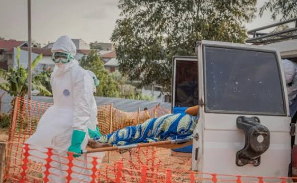
The WHO says it’s ready to start testing two experimental Ebola treatments in the Democratic Republic of Congo starting next week. Speaking in Geneva, Director-General Tedros Ghebreyesus said all the groundwork for the trial is now done.
The two candidates are an antibody drug called MBP134, made by Mapp Biopharmaceutical, and remdesivir, the Gilead Sciences antiviral that became well known during the COVID pandemic. Researchers want to find out if either one — or the two combined — can lower death rates in people infected with the Bundibugyo strain of Ebola, a rarer variant that currently has no approved vaccine or treatment.
The trial will run out of a hospital in Ituri province in the northeast, the epicenter of this outbreak, and will be run jointly by the WHO alongside Congo’s national biomedical research institute, the medical aid group ALIMA, and Oxford University. Roughly a thousand patients are expected to be enrolled to get a reliable read on safety and effectiveness. The US government and Gilead donated the drug doses being used.
As for the outbreak itself: Congo has now logged just over a thousand confirmed cases and close to 280 deaths since it started about five weeks ago. The response has ramped up quickly — treatment bed capacity has gone from under 10 to more than 500 across nearly 20 health centers, and daily testing has jumped from around 30 tests to over 2,000 spread across several labs. Even with that progress, Tedros cautioned that the disease is still spreading faster than the response can keep up, hampered by funding gaps, security problems, weak contact tracing, and difficulty reaching some communities. The outbreak has also crossed into neighboring areas, putting Uganda on alert for possible spillover.